Americana on the Atlantic: Creating National Identity on the Mid-Century Ocean Liner
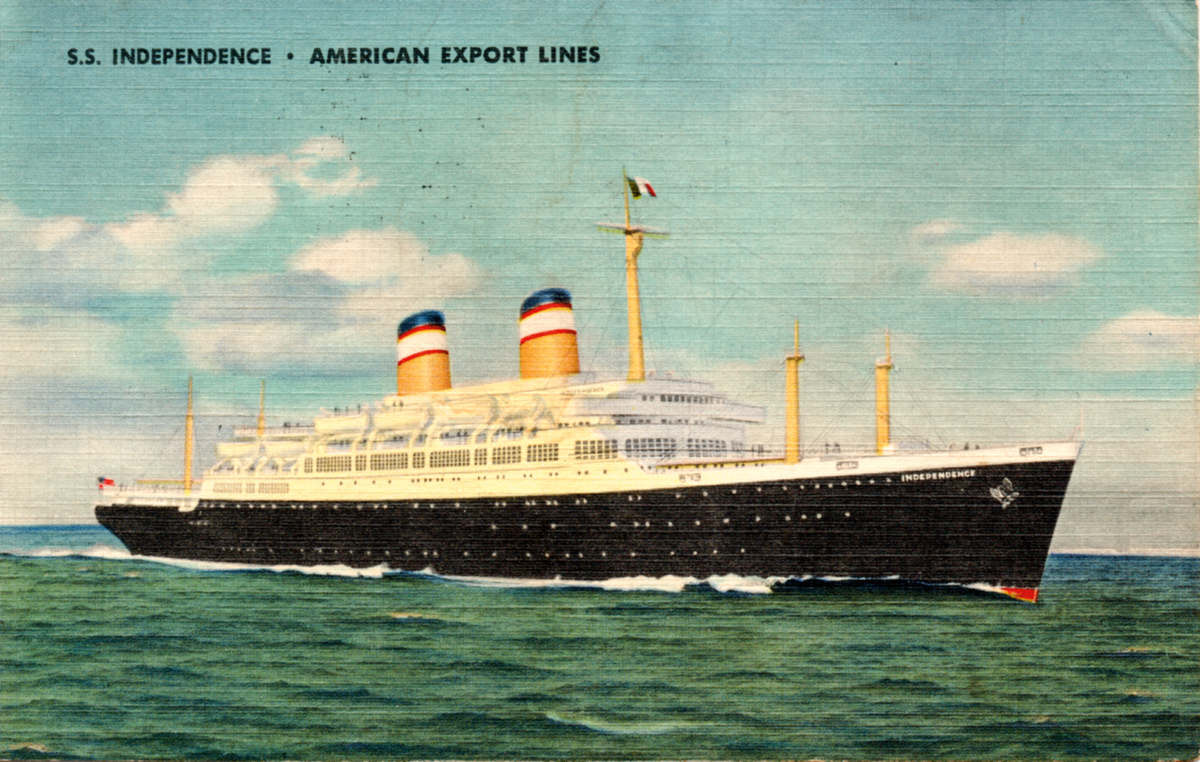
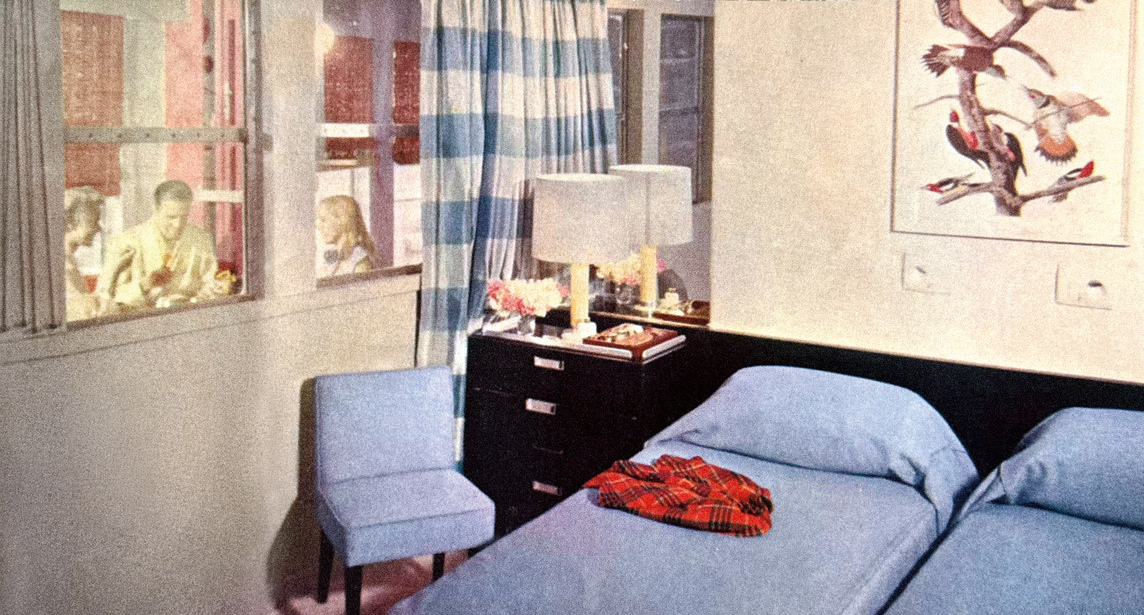
In 1951, the first passengers to board the twin ocean liners Independence and Constitution experienced a new kind of vessel. American Export Lines (AEL), the company that built and sailed them, boasted that the ships offered all the comforts of “Modern American Living At Sea” (fig. 1). Marine trade publications discussed the ultramodern machinery and fixtures of these ships in detail, including the powerful engines, the first ship-wide air-conditioning plants at sea, and the revolutionary organization of the ships’ power, fresh air, and water systems into centralized service towers that guaranteed easy maintenance and quick repair.1 From the moment passengers set foot in the first-class embarkation lobby, however, it was clear that much of the art and furnishings on board belied the ships’ modernism and harkened back to an earlier era of American history. For the first time, authentic antiques set sail. These historic objects were supplemented with a variety of reproduced masterpieces of Americana and contemporary commissions adhering to a similar theme, creating a unique American style of ocean liner interiors that contrasted with those found on European ships. The artistic commissions for the Independence and Constitution are unusually well documented, reflecting the economic goals of AEL and the political and artistic agendas of industrial designer Henry Dreyfuss (1904–1972), who was hired to oversee all aspects of the ships’ engineering, construction, and decor.
By 1951 Dreyfuss was widely recognized as one of the nation’s most respected and prolific industrial designers, known for designing consumer products used by tens of millions of Americans, ranging from John Deere tractors to Hoover vacuum cleaners and Honeywell thermostats. Dreyfuss’s background as the son of lower-middle-class immigrants who prospered through hard work, education, and vision was central to his public image as a pragmatic designer and tastemaker. However, Dreyfuss’s successful designs for two trains, several airplanes, and four smaller cargo-passenger ships for AEL were his main qualifications for the Independence and Constitution commissions.
Dreyfuss selected art deemed as the best representatives of the current “American style” and complementary to the vessels’ historic precedents. He chose the artists with an eye to both political and economic impact, in an effort to attract a broader range of passengers while sending a political message to European competition about prevailing notions of public taste in the United States, which was commonly believed to center the experience of the average person over the elite artistic canon. Dreyfuss used interior design, art, and decor to create a narrative of national identity for the Independence and Constitution. Even the ships’ names had historic origins. The USS Independence (1814) and USS Constitution (1797) were the most illustrious of the early vessels built for the fledgling US Navy. References to these naval icons were found throughout the liners both in art and in the names chosen for the various public rooms and deluxe passenger suites.2 Commissioned art played a central role in building this narrative, often at extravagant expense, but Dreyfuss viewed it as a key part of the interior design process. The art not only referred to American history of the eighteenth and early nineteenth centuries, but it also embraced the era’s popular understanding of folk art and Americana as originating from the “common man.” Homages to Founding Fathers and great leaders were largely jettisoned in favor of art created by or depicting modest anonymous craftspersons, merchants, and laborers, rejecting the idea that art was the bastion of highly trained and elite tastemakers. Despite this humble narrative, tradition joined the most technologically advanced vessels of the era to unite, at least in the minds of passengers, the success of mid-century American business and technology with the spirit of earlier craftspersons and patriots.
In 1951 AEL had been in operation for almost thirty-two years but was just making its entry into operating major ocean liners.3 The Independence and Constitution, built to take advantage of the postwar travel boom, represented a huge leap forward in the company’s passenger service. Each was 682 feet long and carried 1,000 passengers at a respectable 22 knots, or 25 miles, per hour. Although these liners were a great deal smaller than some of the premiere liners on the major routes from New York to the United Kingdom and continental Europe, they were among the largest and fastest ships running to Mediterranean ports. AEL first retained Dreyfuss’s firm in the late 1930s, but his responsibility for all aspects of the engineering, construction, and decoration of the Independence and Constitution was an arrangement new to shipbuilding.4
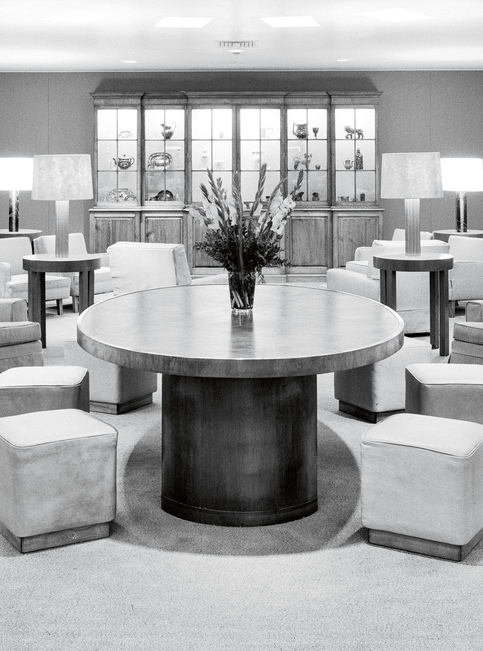
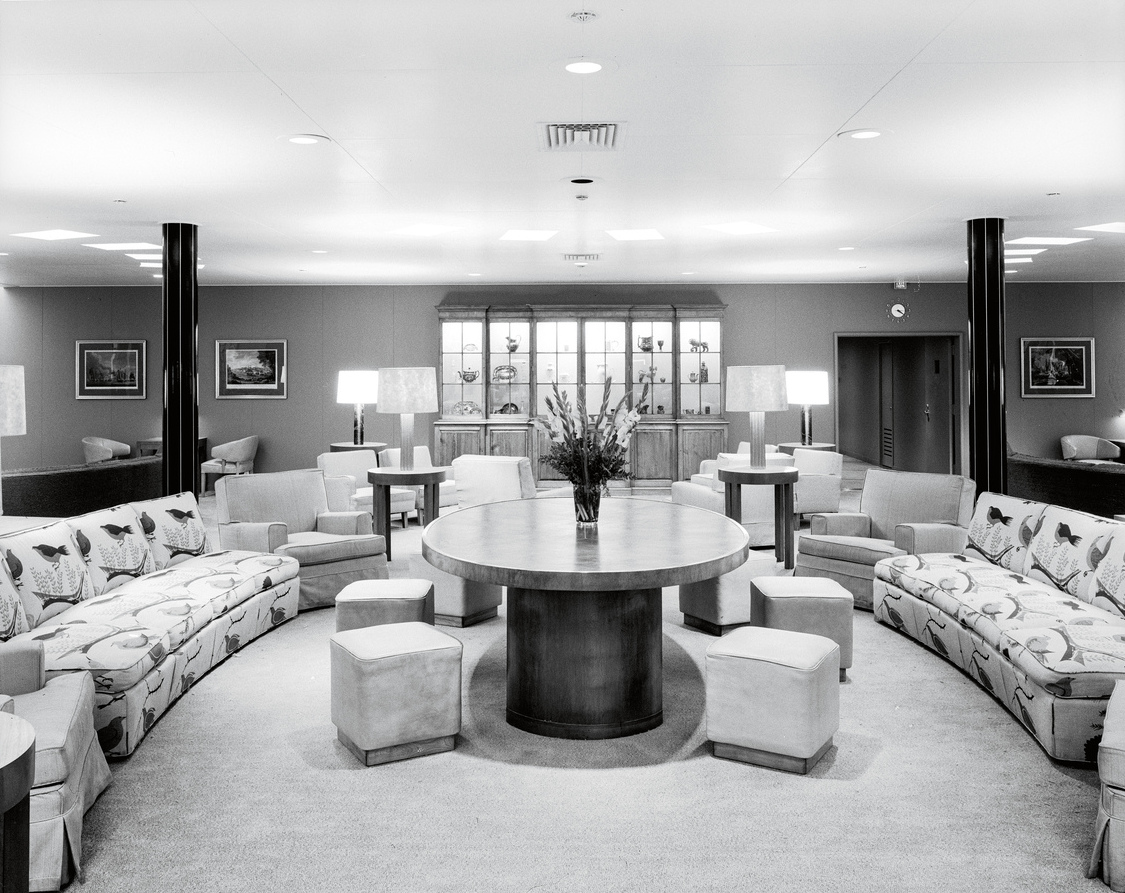
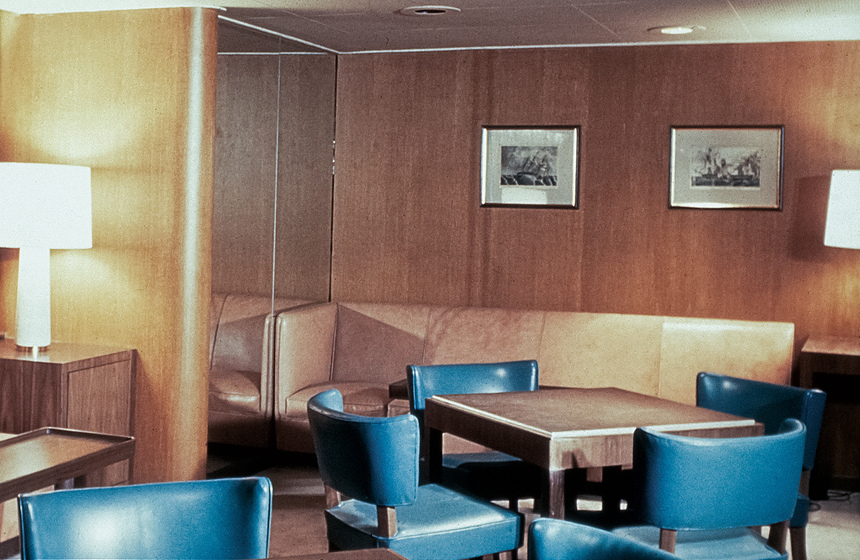
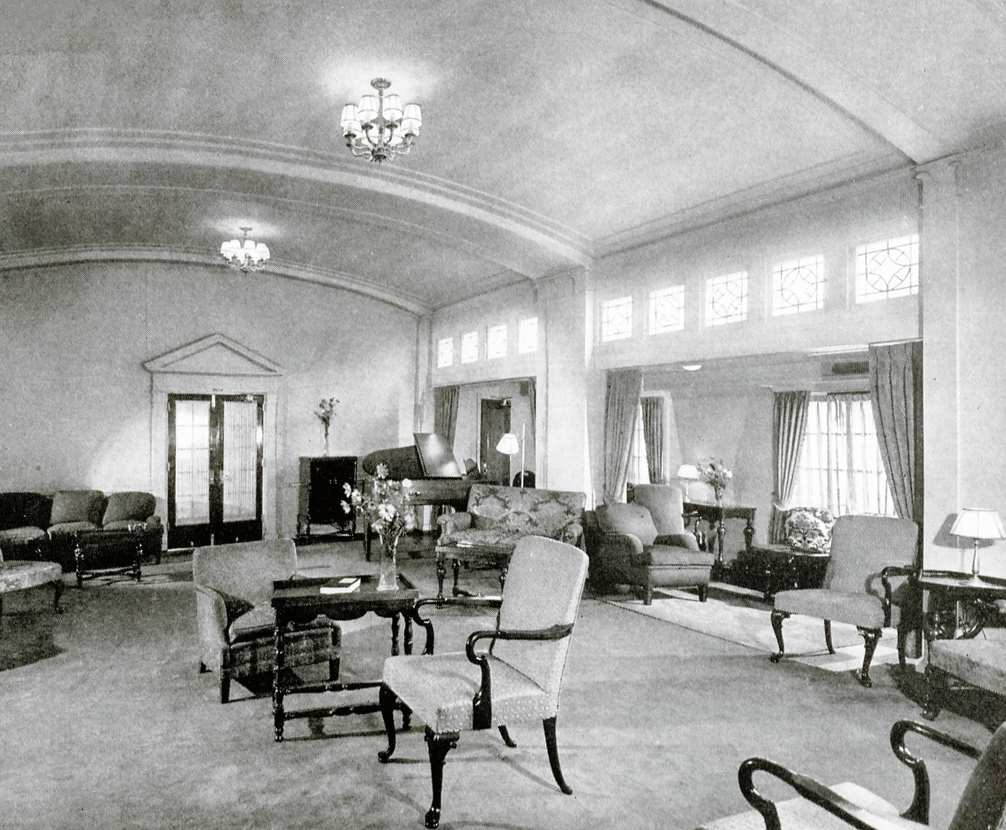
To contemporary eyes, the interiors of the two ocean liners may seem underwhelming, especially in contrast to the grand and luxurious European liners of the mid-twentieth century (fig. 2). The public rooms of the AEL ships more closely resembled the living rooms of a typical American suburban family. They were single-story, low-ceilinged spaces filled with unassuming contemporary furniture. Knotty pine veneer, linoleum, and Formica, so beloved within the mid-century aesthetic, abounded across all passenger spaces. Against this backdrop, antique objects and fine art stood out as major decorative features, not only connecting each ship to its historic predecessor, but also appealing to the growing appreciation for folk art and Americana both in the popular lexicon of design as well as in scholarly research.
AEL budgeted a generous sum of $106,930—approximately $1,376,895 per vessel in 2024 dollars—for each ship’s art.5 The purchases fell into one of three categories: authentic antiques borrowed or acquired for display; commissioned reproductions; and contemporary art commissions. Dreyfuss, working alongside his team, personally chose all works of art, visiting numerous galleries and studios to select a variety of critically acclaimed artists and emerging talent. He was careful, however, to avoid the extremes of modernity while also eschewing clichés of tradition.6 He negotiated commissions from late 1949 into the early 1950s, and the works were approved and installed in 1951 shortly before the Independence’s maiden voyage in February, and the Constitution’s in July. The interior decor, and even much of the art found on board, was identical across both ships, with the exception of a few antique pieces and specific items relating to the name and historic precedents of each vessel. As the first ship of the pair, the Independence was the better-documented liner, and most surviving interior photographs are of that vessel. However, the Constitution received greater publicity during its career thanks to the ship’s numerous appearances on television and film, including enthusiastic press coverage of Grace Kelly’s 1956 crossing to marry Prince Rainier of Monaco.
No ocean liner before or since has rivaled the Independence and Constitution for the number and variety of historic objects on board. This distinction was achieved thanks to an arrangement unique in the history of transatlantic passenger shipping, and certainly in the museum world: a long-term loan from the American Wing of New York’s Metropolitan Museum of Art. A loan between a museum and a commercial enterprise is rare, and in fact, the Met’s board formally resolved to refrain from such scenarios as early as 1941.7 However, Vincent Andrus, curator of the American Wing, became a major proponent of this loan, not only in securing board approval for an exception to the bylaws, but also by navigating the extensive paperwork and arrangements related to the objects’ security on display, mainly through specially constructed braces.8 The loan was renewable on an annual basis by mutual agreement between the Met’s board and AEL, and was renewed a total of fourteen times until February 1966. At that point, changing leadership within the Met, combined with AEL’s increasing financial difficulties, precipitated a decision to recall the objects.9 The length of the loan was extraordinary, but toward the end of his career, Andrus stated that he viewed the exception to museum policy to have been wisely made.10
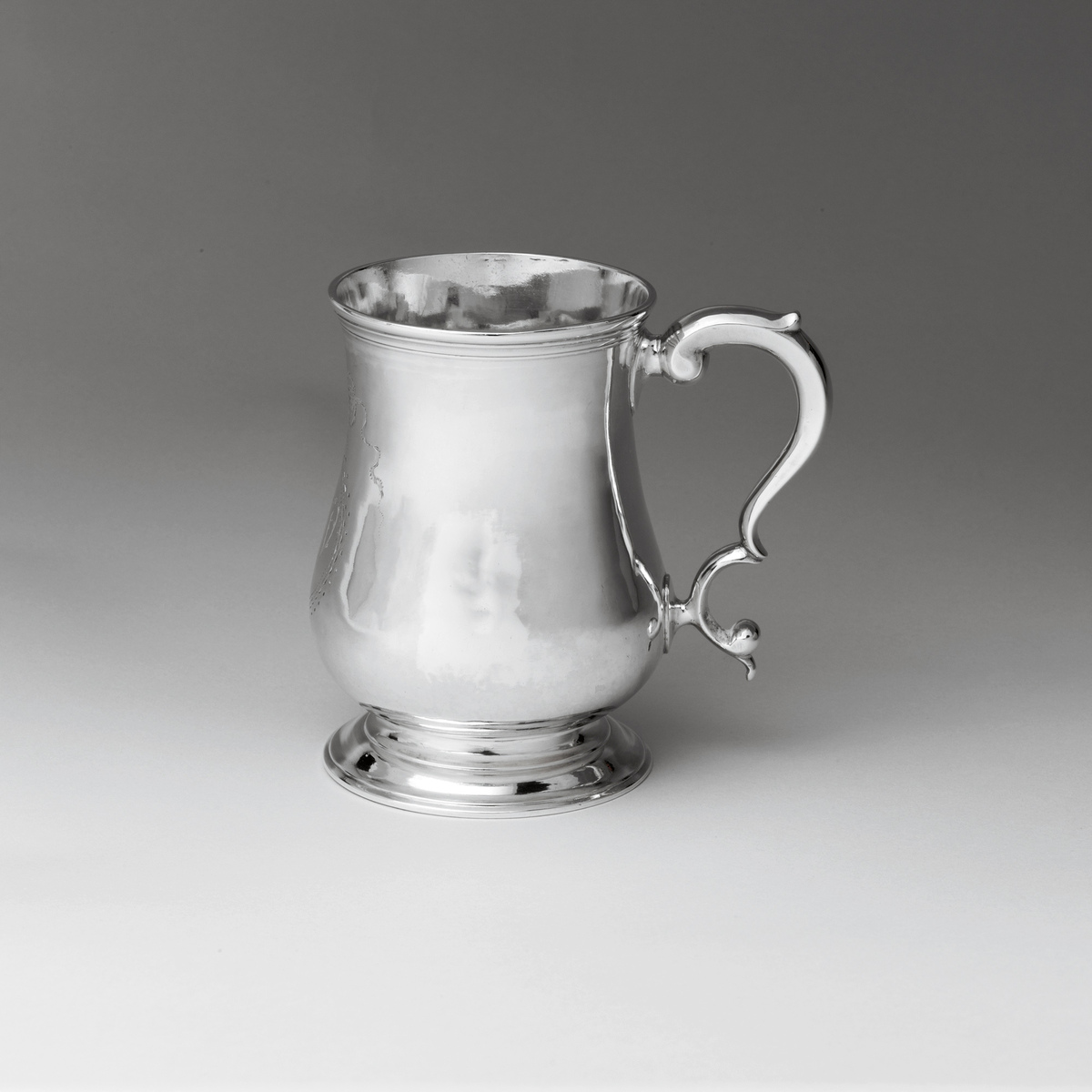
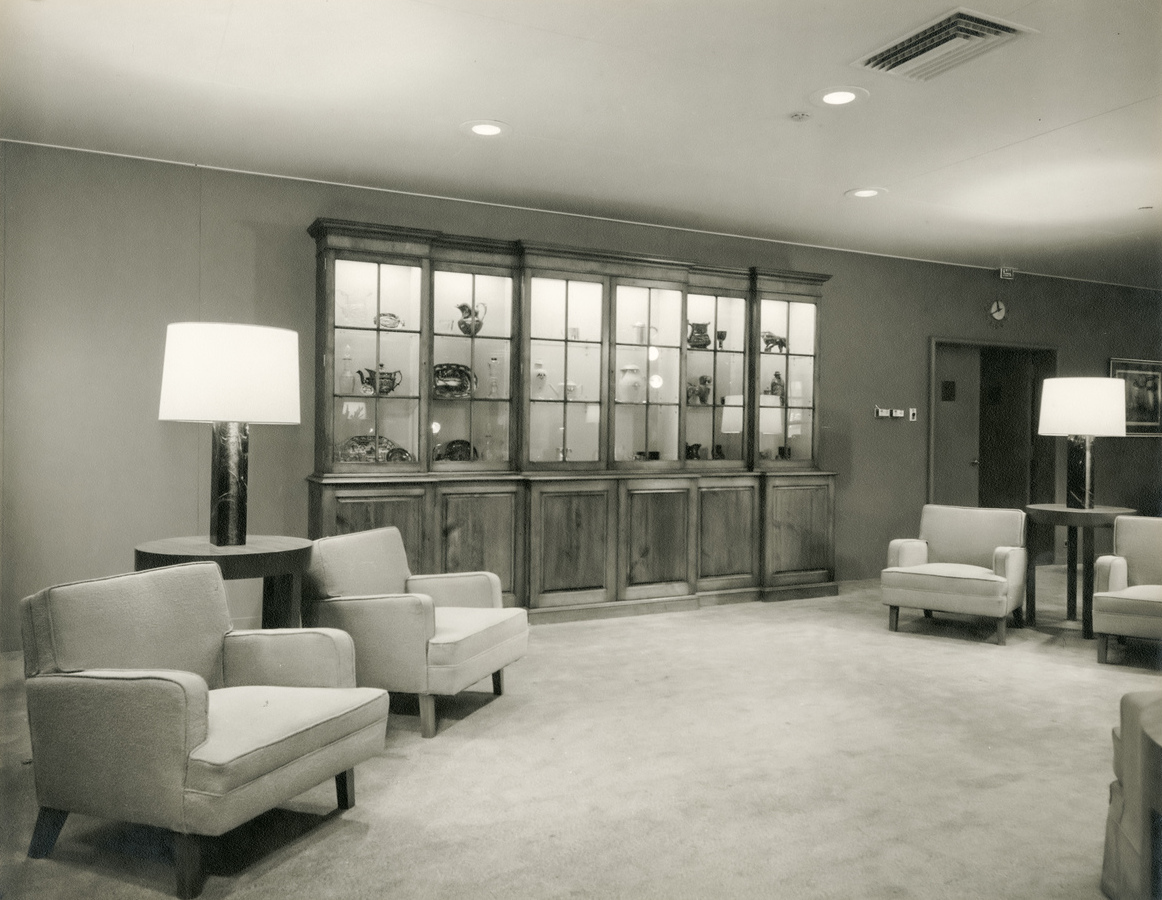
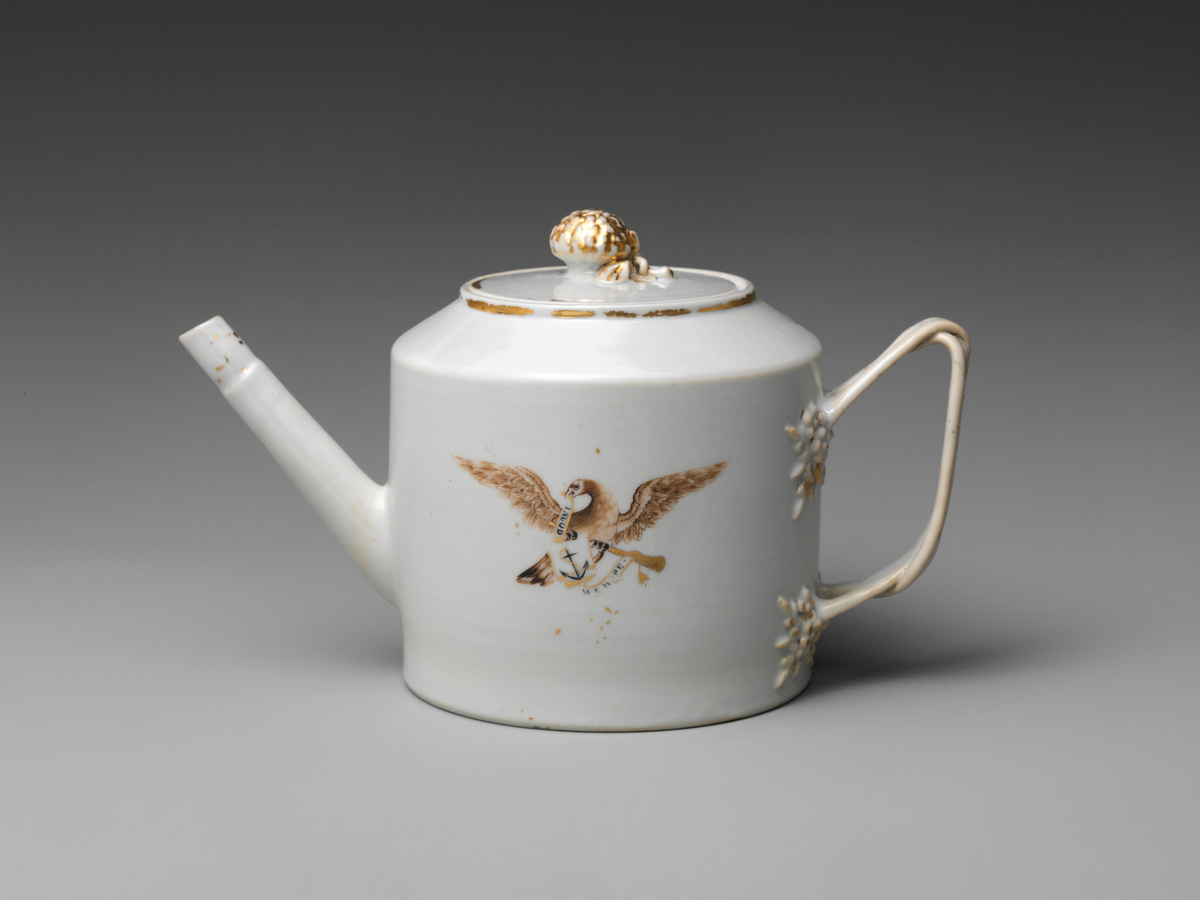
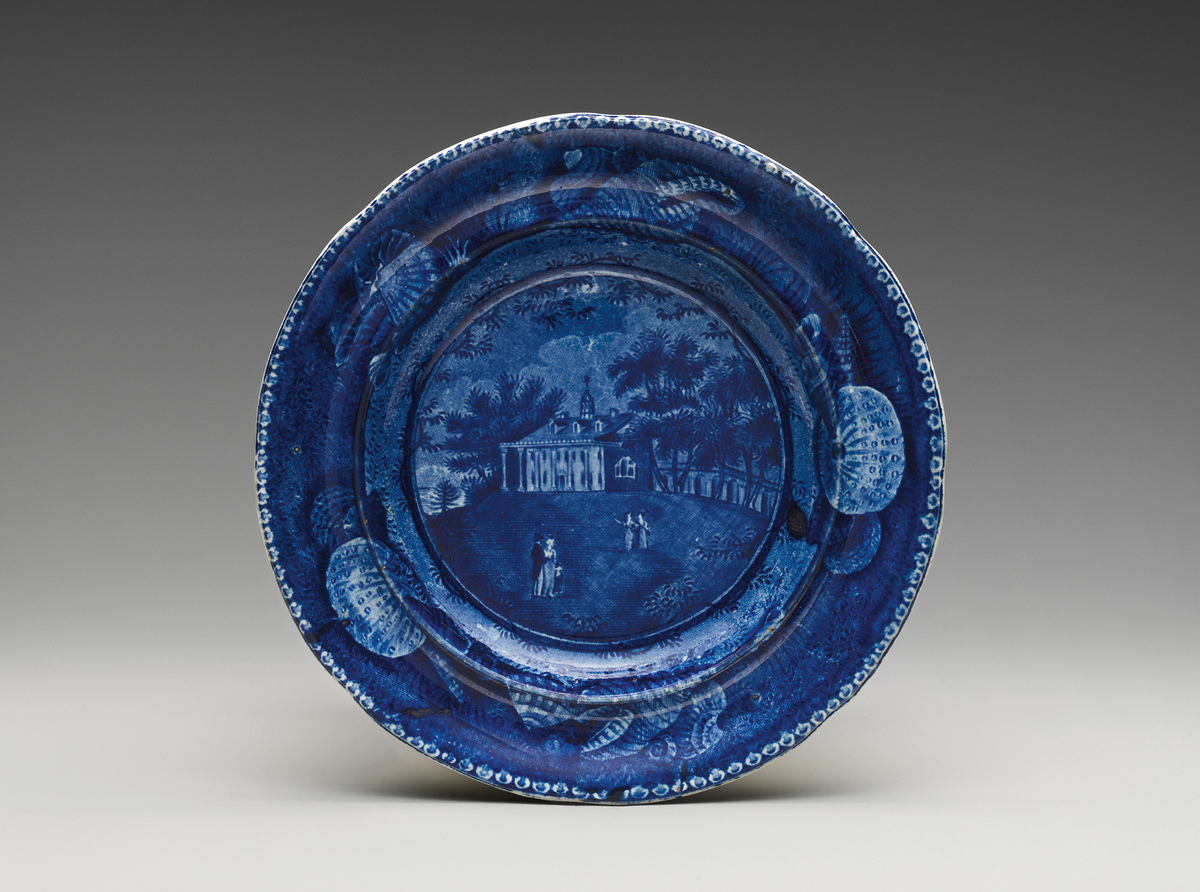
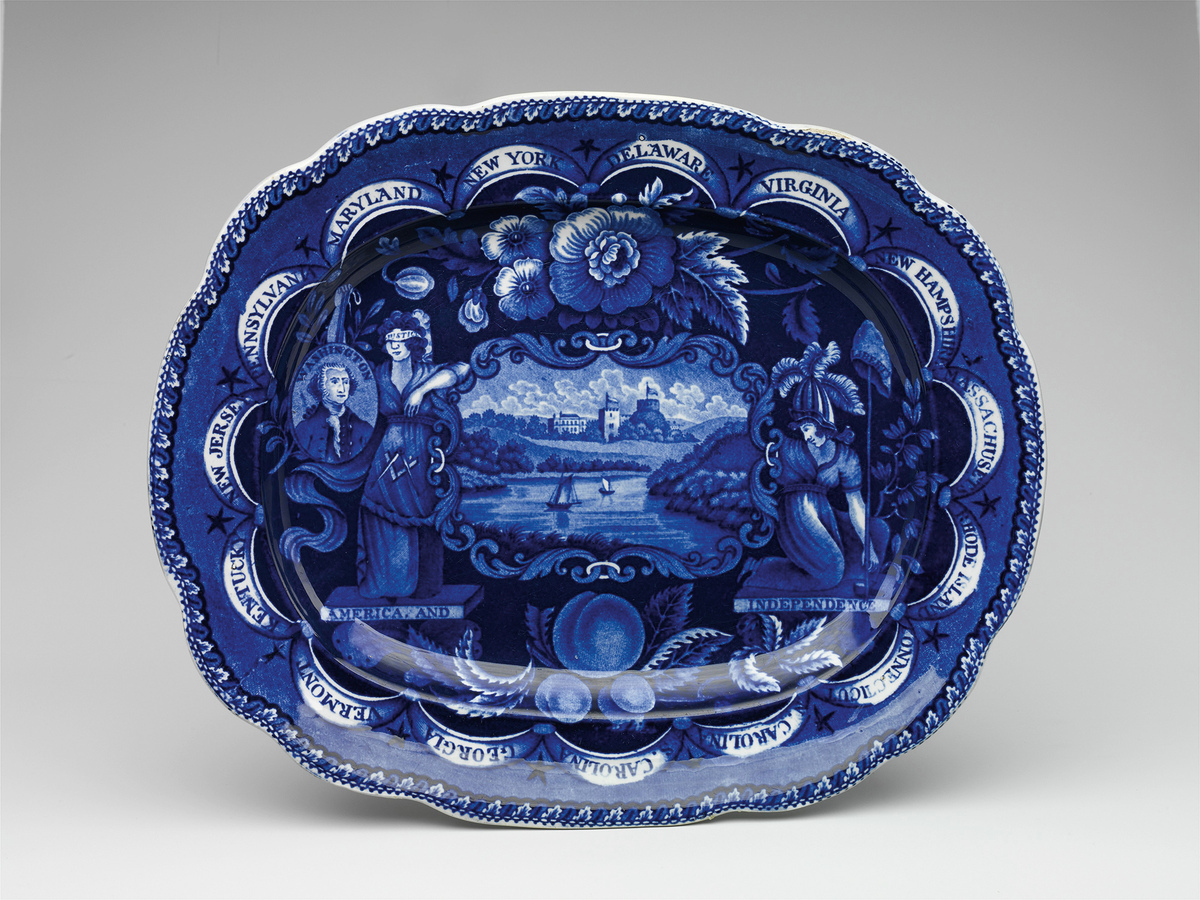
For the first fifteen years of their seafaring lives, the Independence and Constitution hosted an unprecedented display of historic treasures that proved quite popular with passengers.11 Forty-eight objects were loaned to the Independence, and forty-five to the Constitution, all either made for the American market or manufactured in American workshops between the mid-eighteenth and late nineteenth centuries. Chief among the loans were two silver objects made by Paul Revere: a cann (listed as a mug) was selected for the Independence and a porringer for the Constitution (fig. 3). The inclusion of these objects was an impressive accomplishment for Dreyfuss, as Revere had been a major figure among American folk heroes since the 1870s, helped by Henry Wadsworth Longfellow’s 1860 poem. His name alone caught the attention of audiences, even if they had little familiarity with decorative arts.12 Although Revere was the most recognizable name among the craftspersons exhibited on board, other represented silversmiths included William Cowell, John Hasiter, Myer Myers, Joseph Richardson, Samuel Vernon, and Daniel Van Voorhis.13 Ceramics accounted for over half of the loan objects. Each item was chosen either for its patriotic decoration or for its unusual form. Most of the objects were manufactured in Staffordshire or Liverpool for the US market—with a few examples of Chinese export porcelain included for good measure. The rest of the ceramic objects originated from North America. The variety of objects displayed on each vessel was largely similar, although the Independence exclusively received several figurines of animals and people, while the Constitution displayed several examples of Pennsylvania slipware. Likewise, the glassware loaned for the displays consisted of representative examples of various antique forms, including whale oil lamps, molded-glass flasks displaying patriotic iconography, and various glasses and drinking vessels.14
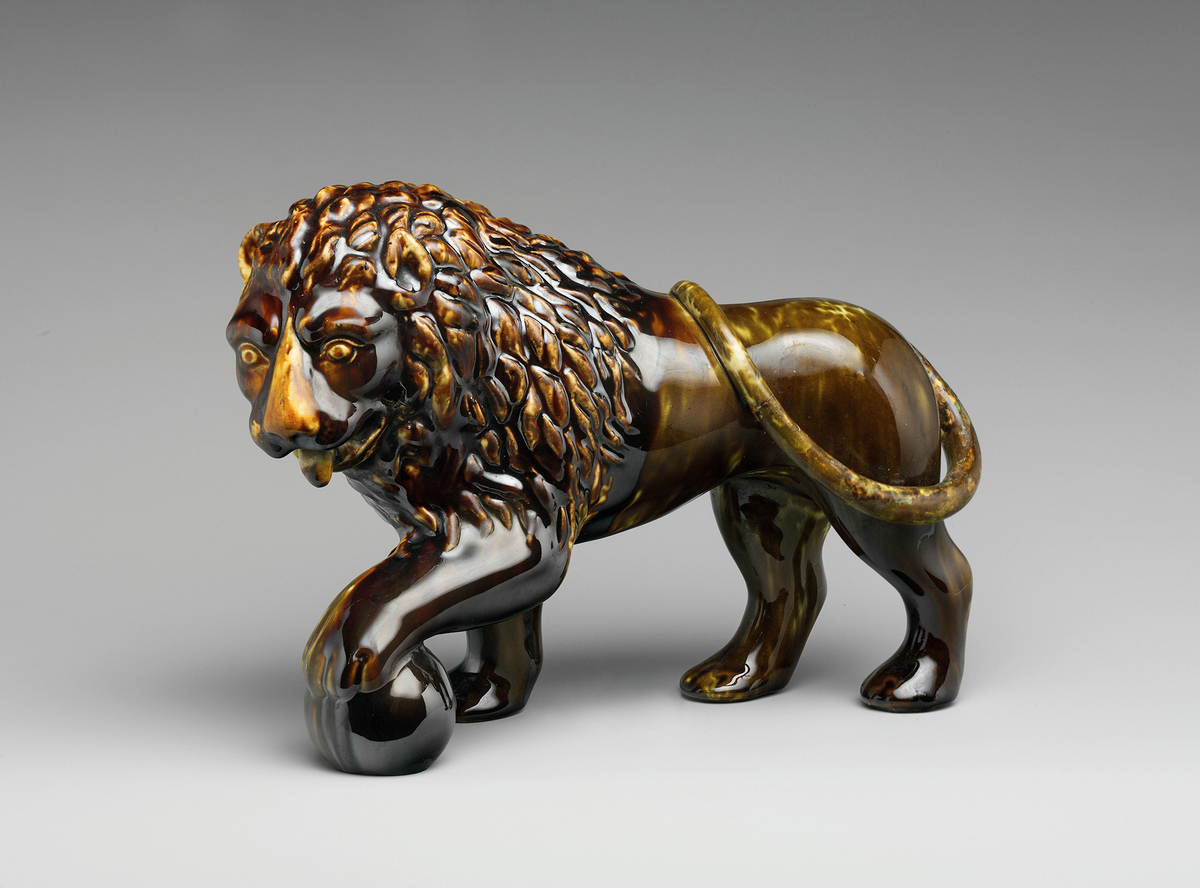
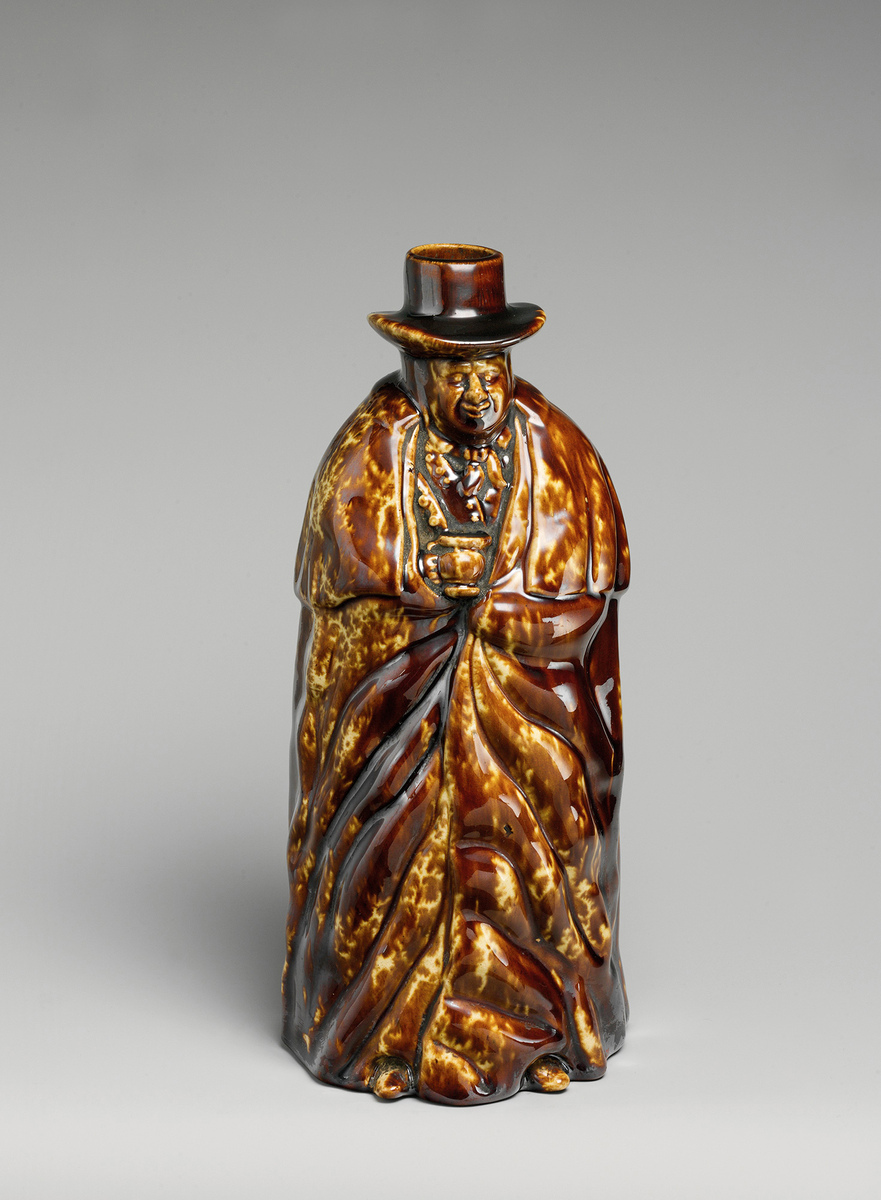
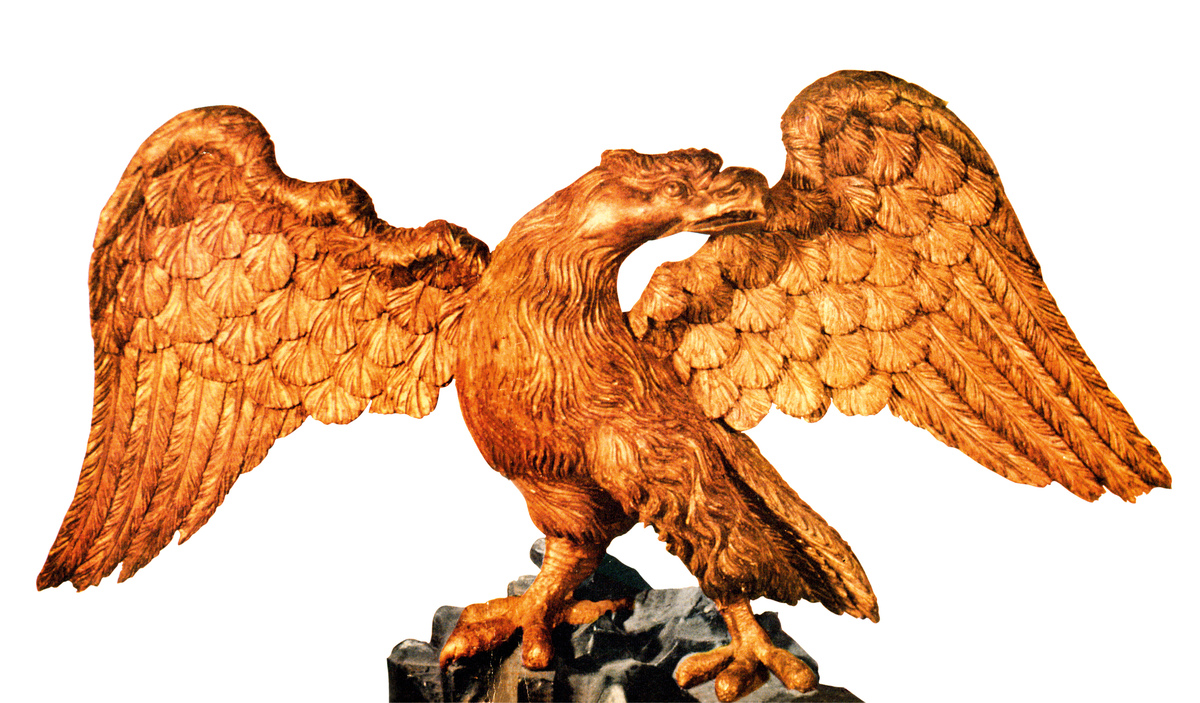
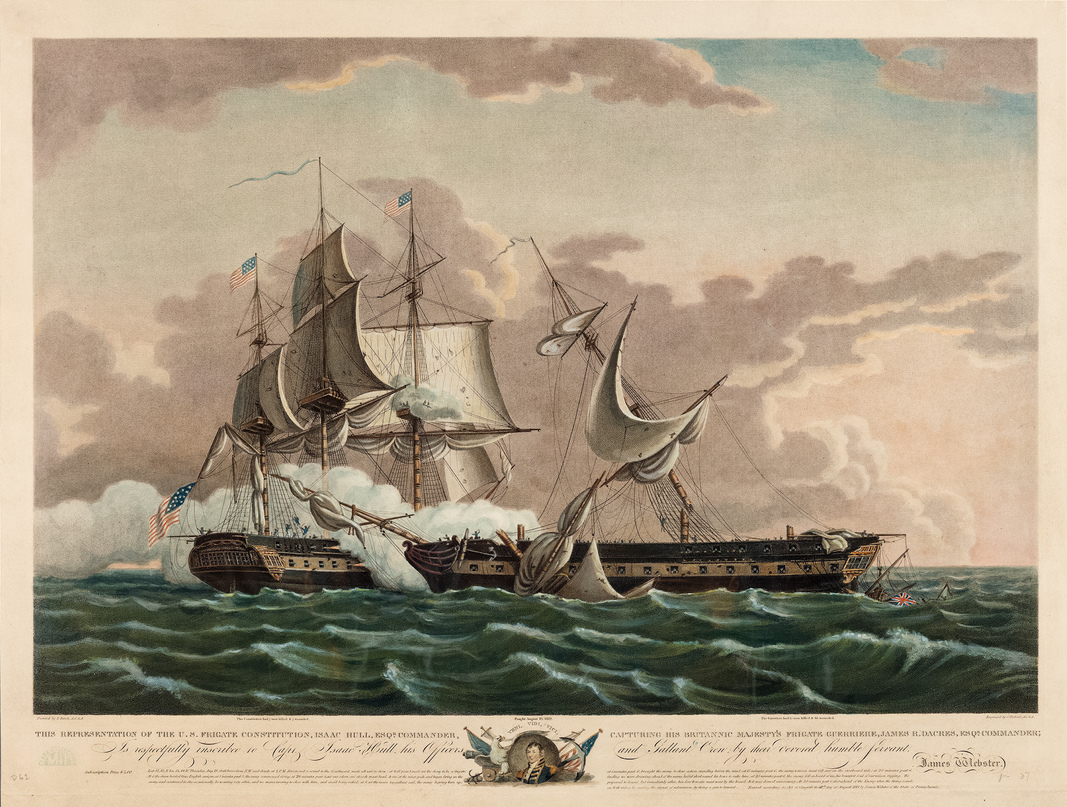
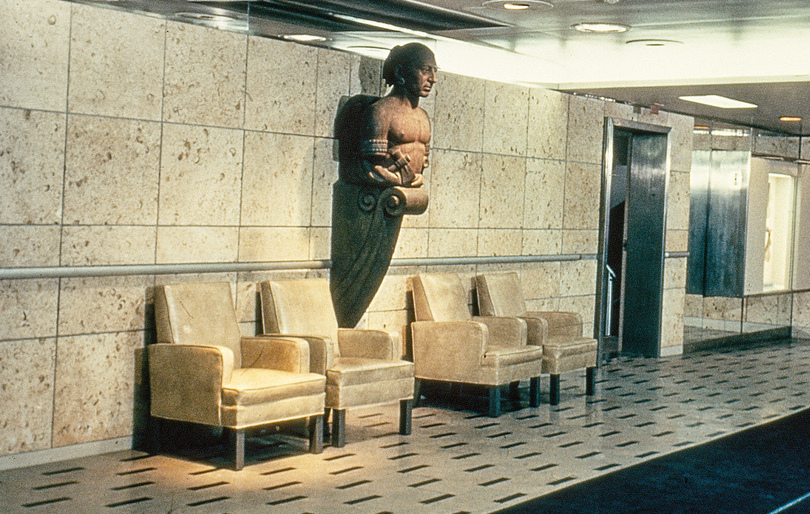
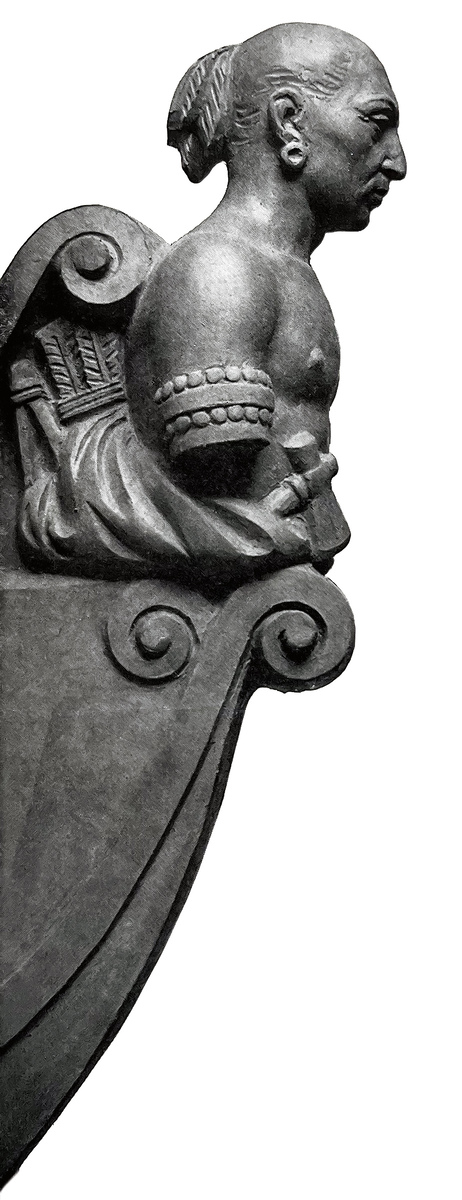
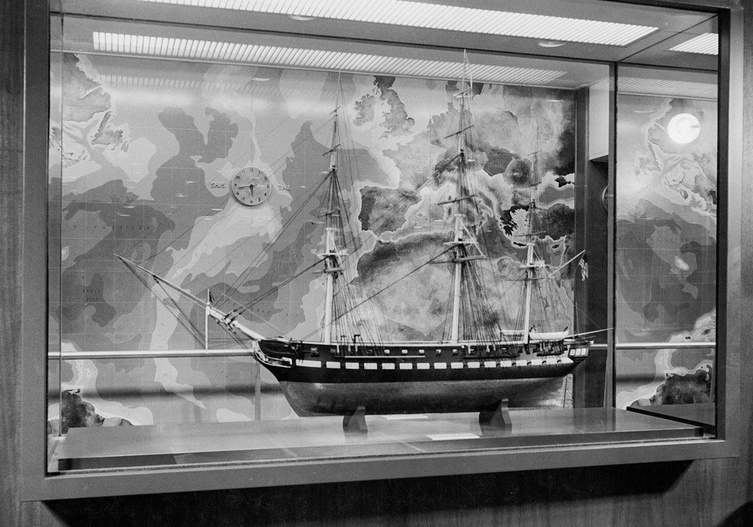
The final, and most extensive, category of Americana found on board consisted of contemporary art commissions specifically designed for the liners’ public rooms. Many of these works were in part utilitarian, such as mosaics surrounding the outdoor pools, murals of maps to show the progress of the voyage, and an abstract decorative screen by Xenia Cage (1913–1995), erstwhile wife of composer John Cage, in the cabin-class lounge. The more significant commissions, which received greater critical attention, were directly inspired by Americana and in some cases continued folk craft traditions established by previous generations.
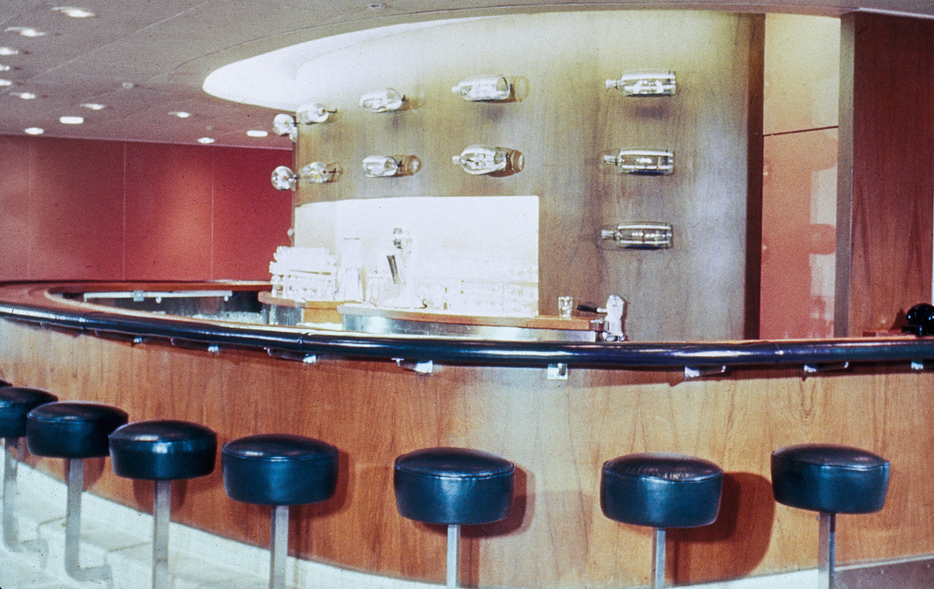
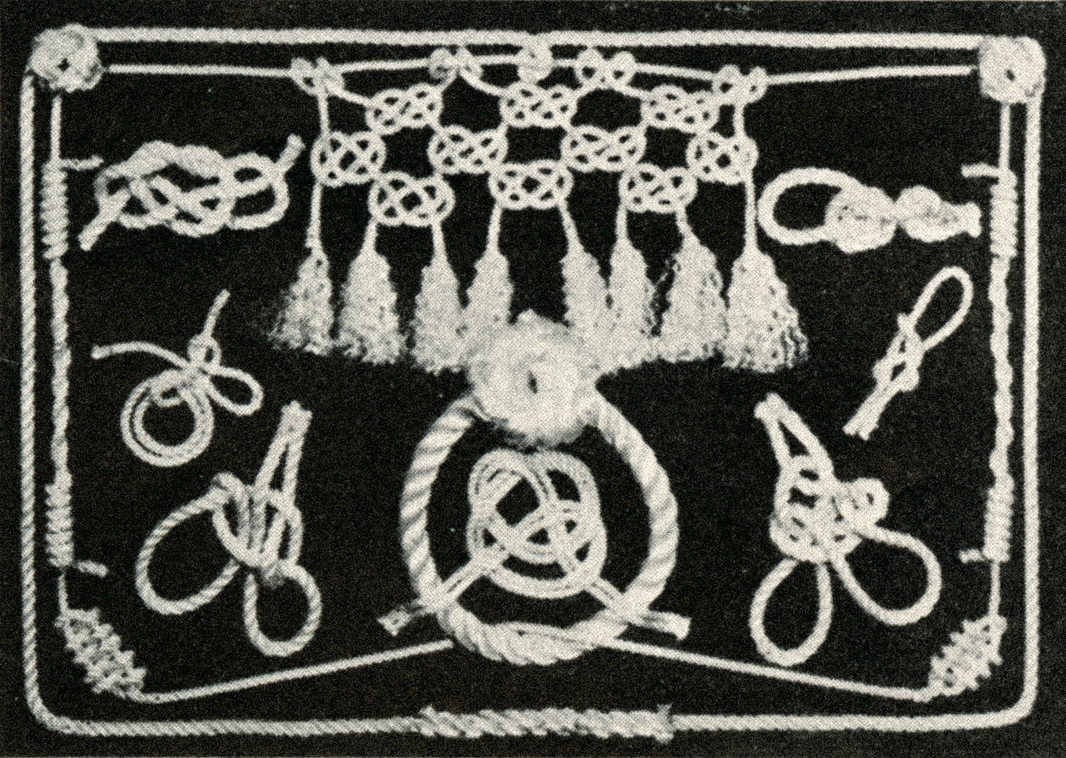
Most notable in this category were a series of twenty seamen’s knot boards designed by Lars Thorsen (1876–1952) and arranged by Ruth Vollmer (1903–1982) (fig. 18).27 Ten went to each vessel, with six displayed in the first-class cocktail bar and four in the cabin-class smoking room and bar, called the Barbary Tavern. Although made of modern plywood and nylon rope, these knot boards were a continuation of the sailor art practices that had existed from the mid-nineteenth century.28 Thorsen was a craftsman who bridged the gap between folk and fine art over the course of his career. These panels, each unique and displaying a different variety of knotwork, directly stemmed from his early life experiences as a sailmaker and rigger.29
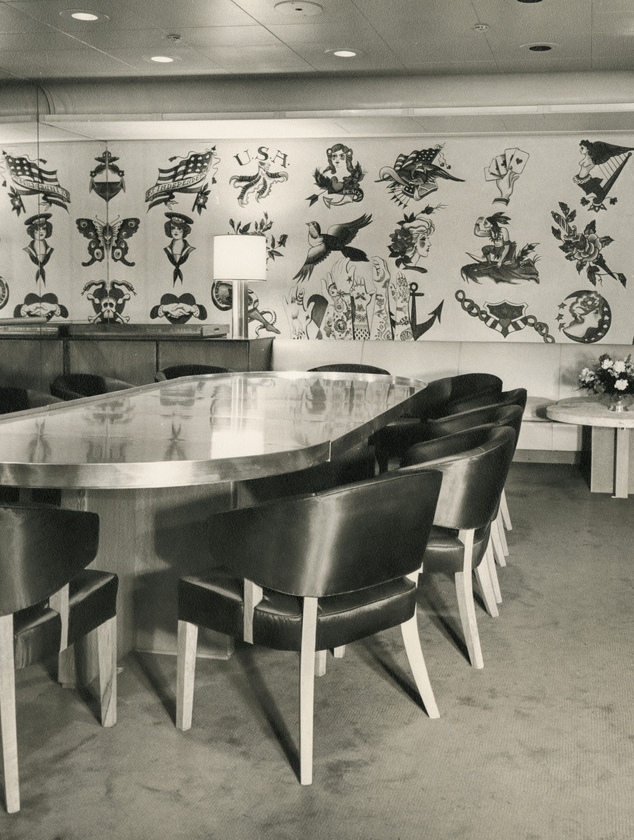
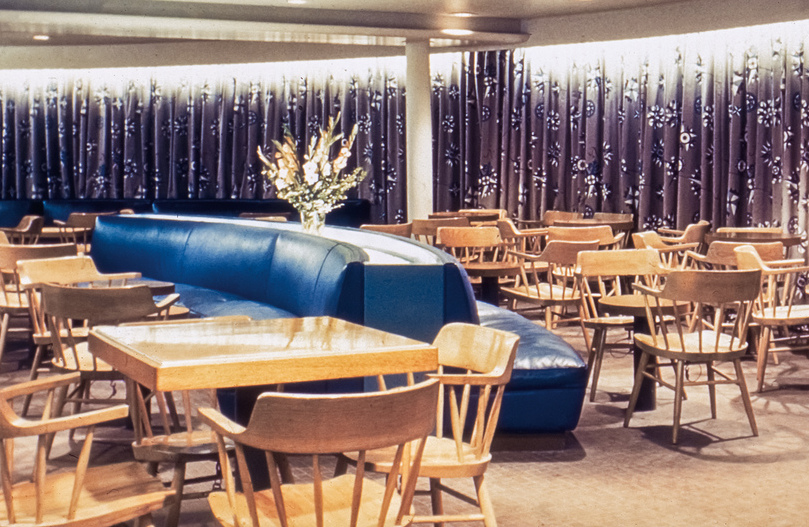
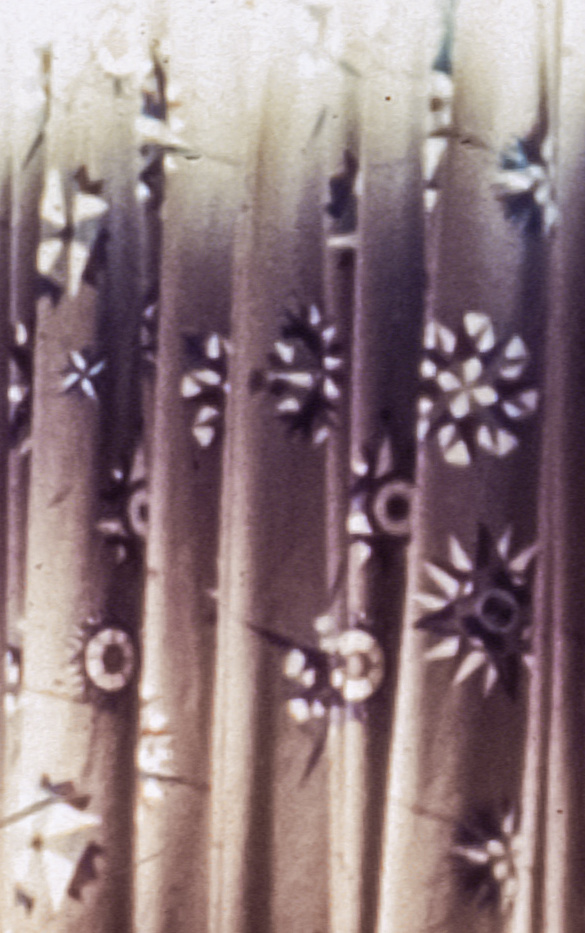
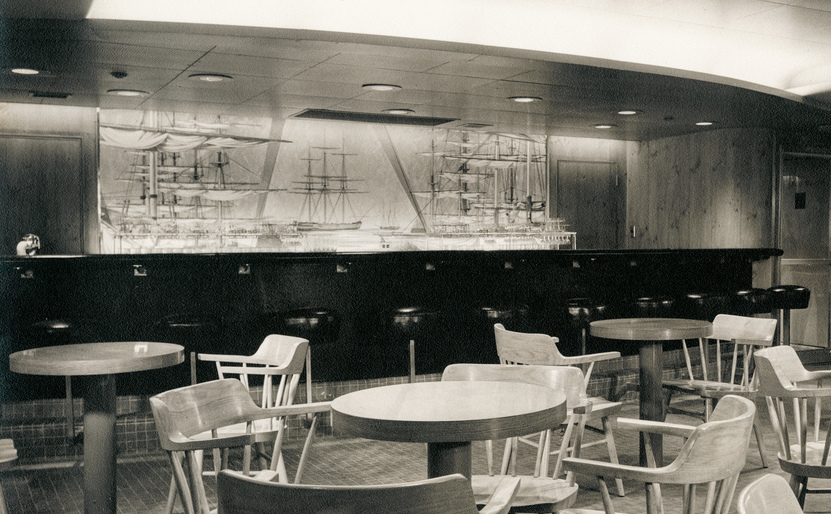
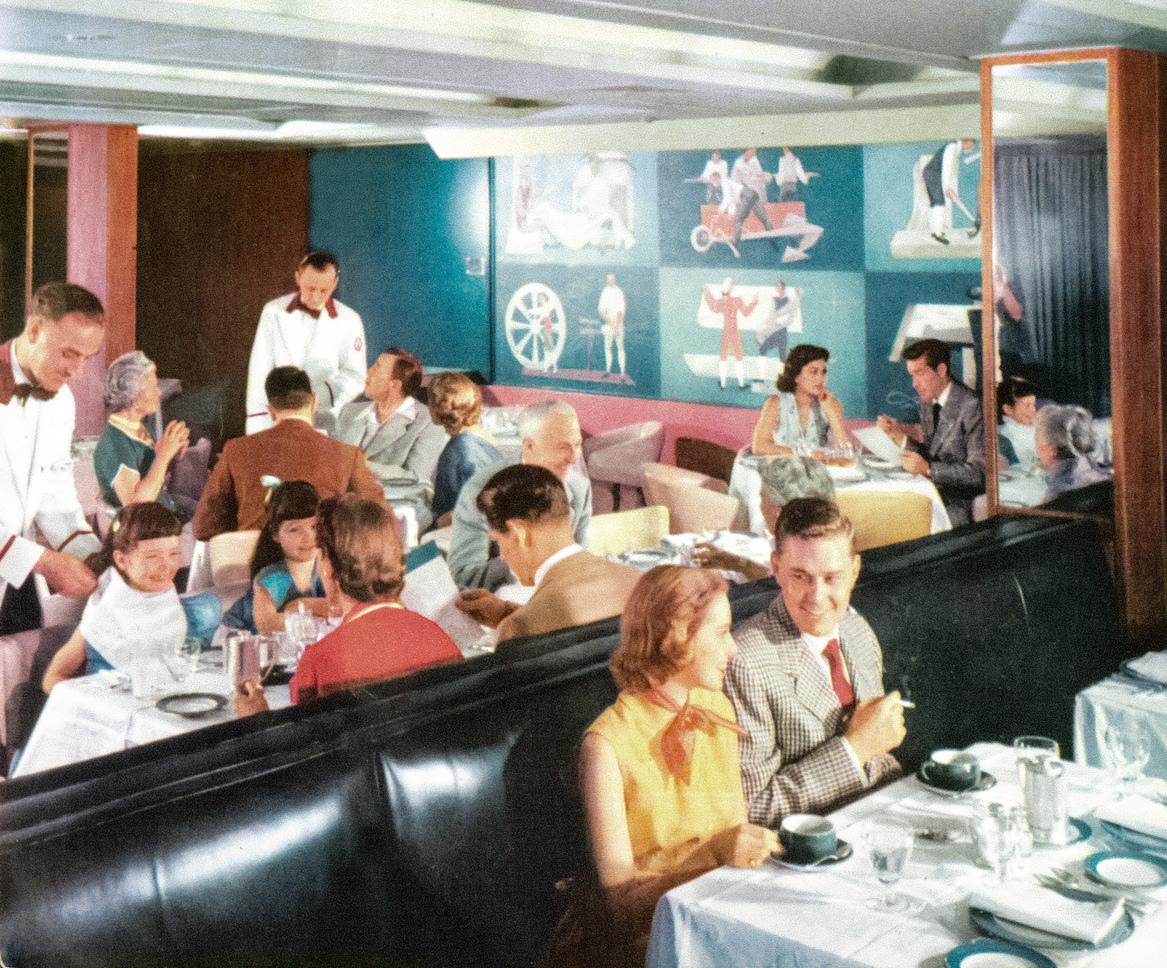
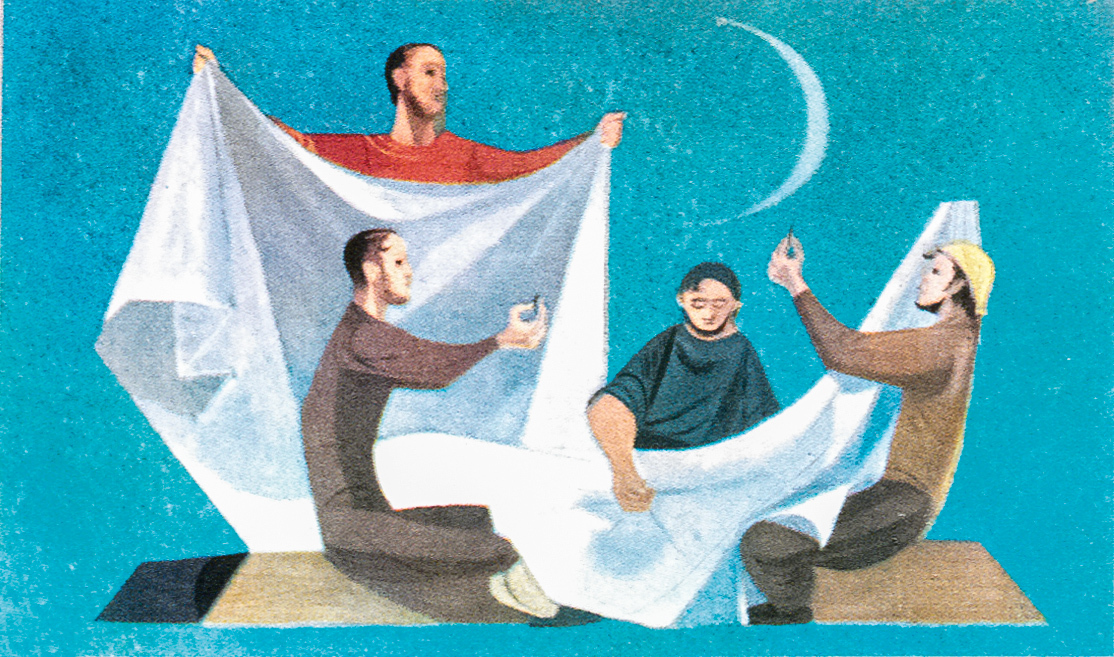
Happily, the entire correspondence between Refregier, Dreyfuss’s office, and I. Stein and Sons, a marine furniture and fixtures company, survives in the Anton Refregier Papers at the Archives of American Art and shows that Dreyfuss personally negotiated with the artists and ultimately approved the final designs.40 The actual contracts and payments, however, were handled by I. Stein and Sons, which manufactured all of the ships’ furnishings based on Dreyfuss’s designs and installed all the interiors and artwork.41 Refregier’s commission is especially significant, as he was embroiled in ongoing controversy over his epic mural series History of San Francisco, which would culminate in Congressional hearings spearheaded by California Congressmen Hubert Scudder and Richard Nixon.42 Publicity materials for the liners made no mention of the ongoing political furor, and Refregier’s murals were featured as a major artistic highlight of the ship’s interiors. Nothing in the preserved correspondence indicates there was any consideration of dropping Refregier from the project. This appears to be in keeping with Dreyfuss’s practice of hiring artists who were in the public eye, with any attendant controversy largely disregarded. Three years previously, he had commissioned a set of four identical murals depicting maps of the Mediterranean for the AEL’s “Four Aces” from Miné Okubo, best known for her 1946 graphic memoir Citizen 13660, depicting the internment of Japanese-Americans during World War II.43
The contrast between the passenger interiors of the Independence and Constitution and those of competing European liners was profound. For example, the first-class lounge on the US liners did not look all that different from the average suburban living room, with low ceilings, neutral colors, and casual furniture—although the loaned objects from the Met lent a rarified touch. Even as early as the mid-nineteenth century, ocean liner decor had famously mimicked the palaces and grand houses of the European elite, and the shift to modernism had not dulled the taste for luxury at sea.
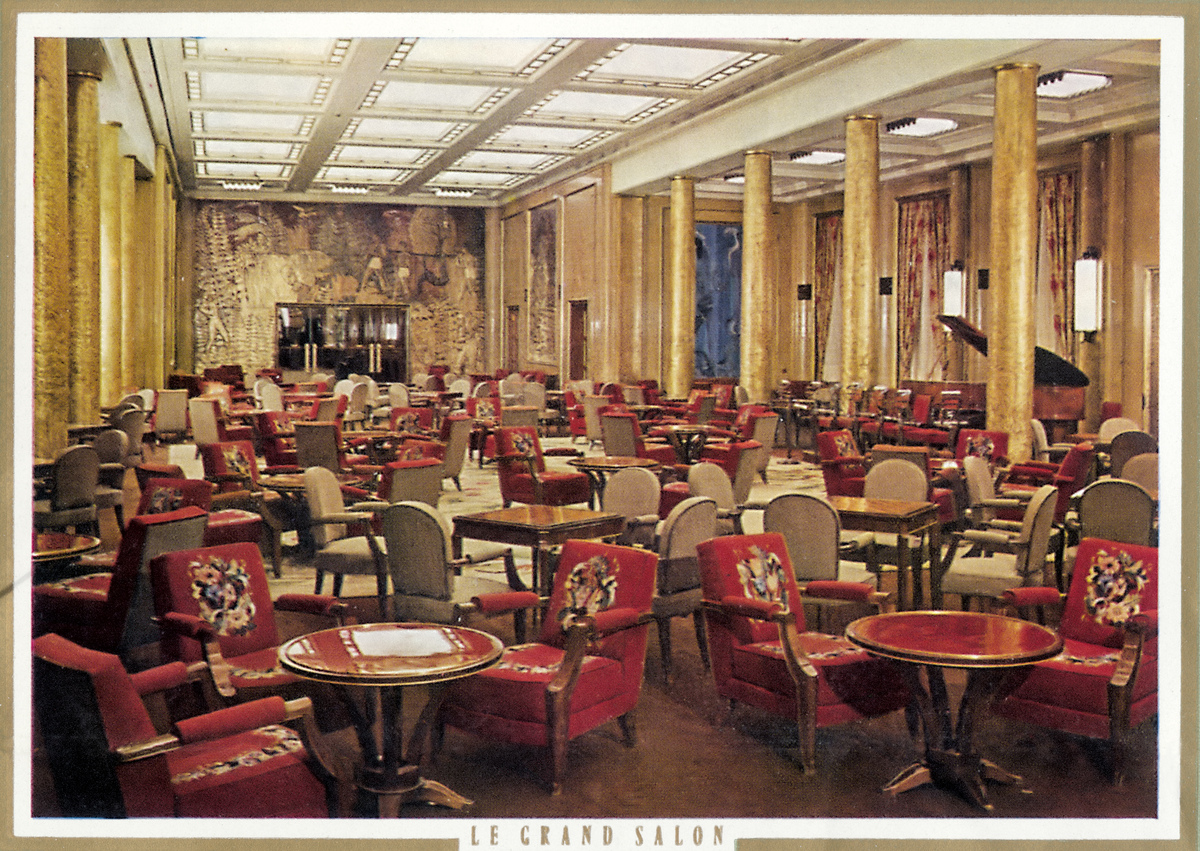
A striking comparison between the Independence and Constitution could be made to the French ocean liner Liberté (fig. 25).44 Its first-class salon was monumental: over 130 feet long and 65 feet wide, with ceilings nearly 20 feet high. Designer Baptistin Spade (1891–1969) created a space of conspicuous luxury: enormous artworks, shimmering gold-leaf columns, exquisite blonde-wood paneling, and stylish walnut furniture covered with brilliant Aubusson tapestry.45 It was a space designed for the ultra-wealthy and intended to overwhelm by sheer volume and sensory experience, while showing the best of France’s rarified crafts, recalling the previous generation of grand Art Deco ocean liners of the 1930s.
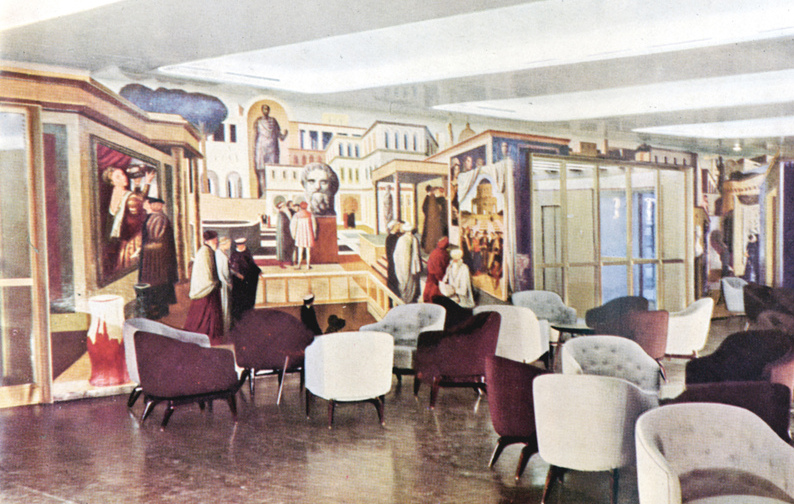
It would be easy to dismiss the interiors of the Independence and Constitution as evidence of a state of anemia within mid-century American design. However, the choices made by Dreyfuss and his design team speak to a concerted effort by the leadership of AEL to appeal to a new demographic: the “average American.” Just before World War II, American travelers had accounted for 60 to 70 percent of annual transatlantic passenger traffic, a figure that would be surpassed by 1950.48 This supermajority of US passengers meant that they did not suffer for travel options. To capture as large a market share of that traffic as possible, AEL sought to streamline operating costs, provide an accessible experience for passengers, and, most importantly, create a familiar and comfortable environment.49 At the same time, Dreyfuss’s artistic selections for the Independence and Constitution centralized the creative talent of the historic American craftsperson within the nation’s mid-century identity. Concurrently, this was a period of rapid developments in scholarly understanding of and popular attitudes toward Americana, folk art, and material culture—a development in which Dreyfuss himself took part.
In popular perceptions of the day, folk art and Americana originated from talented amateurs, who had received no formal academic training in the arts and who produced their body of work on top of the responsibilities of their daily lives.50 Dreyfuss’s low-key persona and self-made reputation aligned with this line of thinking.51 However, he was also a keen student of history and realized that Americana had greater impact than just as a popular decorating fad. American scholarly interest and collecting trends developed at the same time as Dreyfuss’s career matured and his design firm grew. Folk art quickly became a frequent topic of curatorial interest at the Museum of Modern Art, under the leadership of Holger Cahill, and of popular collecting at Edith Gregor Halpert’s Downtown Gallery in New York City. Dreyfuss—who moved in the same circles as museum curators, artists, art dealers, and other art enthusiasts—knew how stylistic choices could be interpreted philosophically as well as aesthetically.52 Indeed, as a designer for world’s fair and trade exhibits, including the centerpiece for the 1939 New York World’s Fair, he could stand toe to toe with many museum professionals in terms of his ability to leverage the narrative potential inherent in objects and art. The first scholarly conference on antiques took place at Colonial Williamsburg in 1948, and by 1951 the study of Americana and folk art was rapidly becoming more formalized. A host of museums and accredited programs dedicated to Americana, folk art, and material culture would be created throughout the 1950s and 1960s, including at Winterthur in 1951 and its curatorial program the following year.
Response within the art press to the Independence and Constitution was largely favorable. No critic felt that the artistic choices were in any way regressive or inappropriate for a modern liner. From November 15 through 17, 1950, the art commissioned for the vessels was publicly exhibited in the ballroom of the original Park Lane Hotel in New York City. In the opening essay for the exhibition catalog, John Slater, president of AEL, stated the company’s wish that “these ships . . . acting constantly as ambassadors at large for our country, will be the medium of thus bringing outstanding examples of American cultural achievement to various parts of the globe.”53 Alfred Frankenfurter, editor of Art News, also contributed an essay to the catalog, stating that the historical subject matter had largely been successfully translated into contemporary artistic vernacular: “the story told in visual forms as simple and attractive as the pure lines of a skyscraper or a big fast ship. . . . This is art that speaks for us, for our lives and how we live them—by spokesmen who are among the most poetic of our time.”54 Competing art periodicals were no less complimentary, if more nuanced. Ralph Pearson of Art Digest found that the commissions for the ships were evidence of a maturity in the evolution of American contemporary art, although he criticized a mural of Boston Harbor by Joe Jones (1909–1963) in the first-class dining room, saying it was nothing more than a forty-foot easel painting.55 In its November 1950 issue, Art News declared that the artistic choices were a welcome break from the traditional choices of shipboard decor, one that neatly avoided the trap of re-creating period rooms while also dodging the wholesale embrace of modernity and its outright rejection of tradition.56
Popular interest in Colonial Revival styles had begun in the 1930s and lasted until well into the 1970s. Several factors played into this longstanding trend. In general, the first waves of Art Deco modernism arriving from France had not gained much traction with individual US consumers, although it was quickly embraced for public buildings. The original preference within Art Deco for luxurious materials and sinuous forms priced out most of the market and made it difficult for mass production. The abrupt economic cataclysm of the Great Depression and its lingering effects created a preference in the 1930s for “timeless” and thrifty designs that either directed consumers to Colonial Revival styles or to a simplified and more achievable modernity.57 The global crisis of World War II, and the societal adjustments in its immediate aftermath, likewise prolonged the preference for “traditional American design” as a choice for home furnishings. Folk art in particular appealed to adherents of both traditional design and modernism, thanks to its origins in the nation’s past and the widely held view among collectors, art dealers, and scholars that it was a precedent for modernist American art. Projects such as the Index of American Design in the 1930s, as well as developments in the antiques trade, helped formalize traditional folk art forms within the popular consciousness, and their humble origins meant that some original examples (and reproductions) were well within the means of the average household budget.
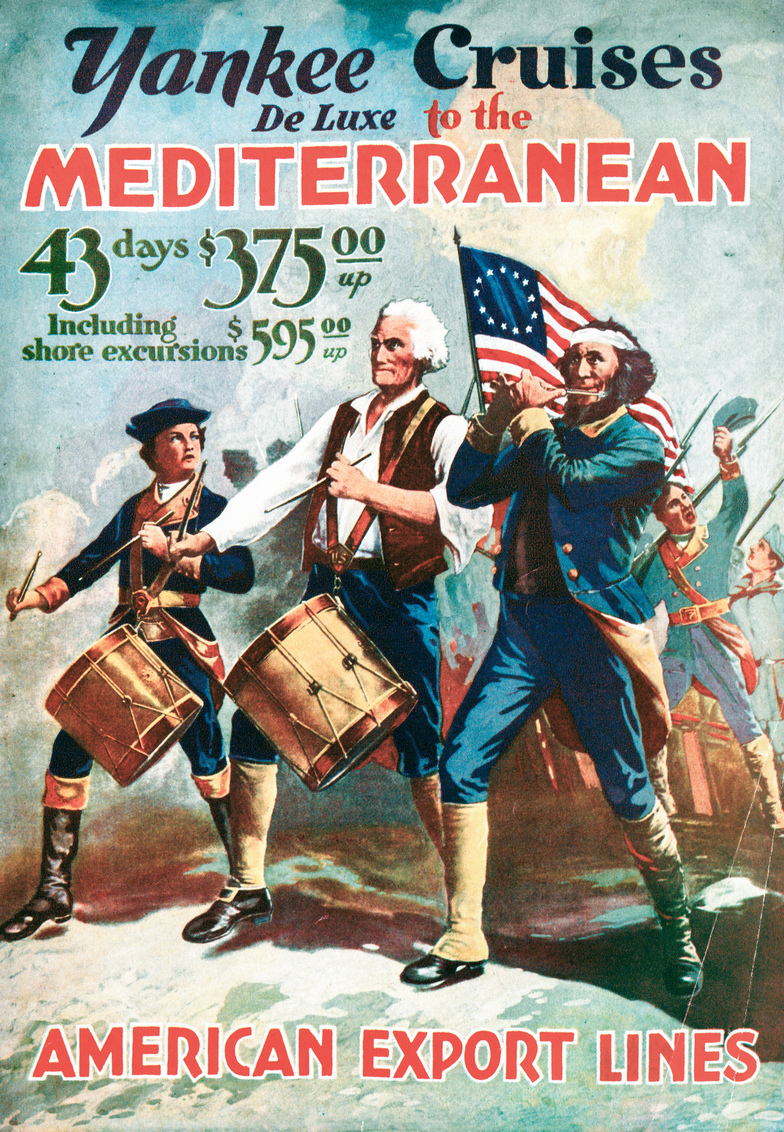
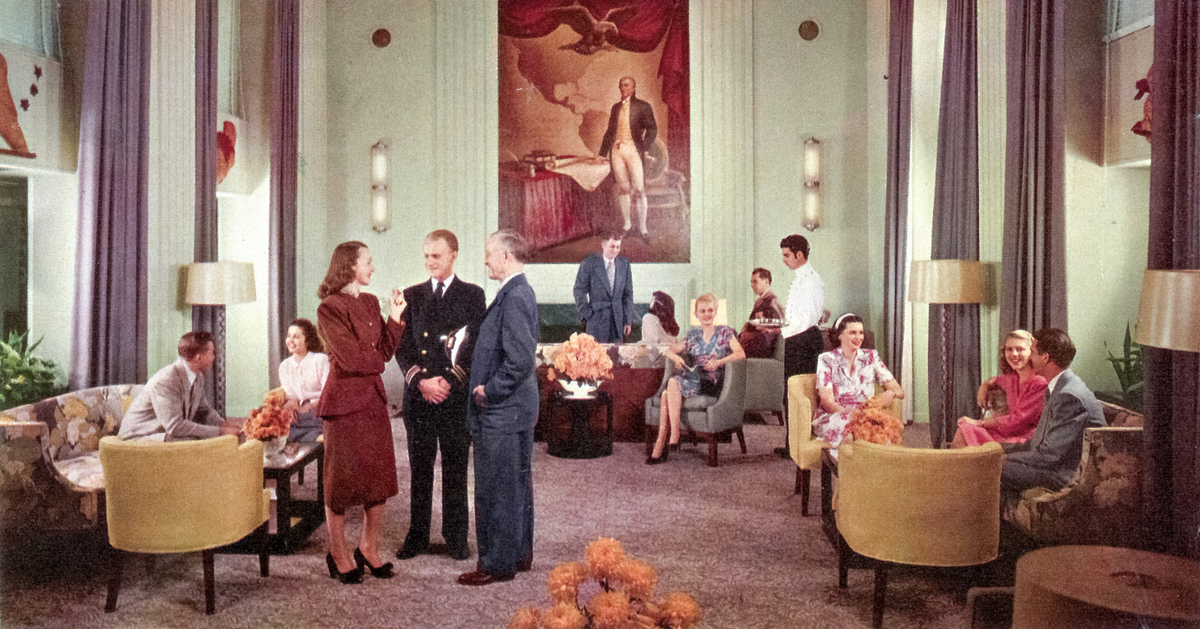
This preference for melding tradition with a more approachable, simplified school of modernism began to find a unique outlet within US shipbuilding during the 1930s. At the beginning of the decade, AEL was one of the earliest proponents of this approach. The design of their passenger quarters rejected the excess of Art Deco found elsewhere at sea. Instead, the company chose a style they described as “home-like and colonial”—what passengers would expect to find in a suburban home or local country club, with reproduction Colonial Revival–style paneling and reproduction furniture (fig. 27). Notably, photographs of passenger spaces do not show art of any sort.

Acknowledgments
About the Author
1 “Passenger Liner Independence,” Marine Engineering and Shipping Review 57, no. 12 (December 1952): 88.
2 Independence, Constitution Deck Plan, brochure (New York: American Export Lines, 1953), 4.
3 Originally founded to carry cargo between the United States and Mediterranean and Black Sea ports, the company had previously run small cargo-passenger ships.
4 Dreyfuss was hired in the 1930s to outfit a fleet of seaplanes for the short-lived subsidiary American Export Airlines and in 1948 created the interiors for the Excalibur, Excambion, Exeter, and Exochorda, popularly dubbed the “Four Aces.”
5 Art Allowance Schedule, March 16, 1950, Henry Dreyfuss Archive, TMS box #V-915, roll 14; American Export Lines, Inc., Cooper Hewitt, Smithsonian Design Museum, New York (cited hereafter as Dreyfuss Archive).
6 Henry Dreyfuss, Designing for People (New York: Simon & Schuster, 1955), 127–28.
7 Vincent Andrus to James Rorimer, June 12, 1957, Loan Granted Records, American Export Lines, 1951– , L7808, Thomas J. Watson Library, Metropolitan Museum of Art (cited hereafter as Loan Granted Records).
8 Loan recommendation to American Export Lines, January 5, 1951, Loan Granted Records. The braces were manufactured by Lambert Cabinet Works.
9 Extract of Board Meeting Minutes, February 8, 1966, Loan Granted Records.
10 Vincent Andrus to James Rorimer, June 12, 1957, Loan Granted Records.
11 John Gehan to Lydia Powel, June 10, 1957, Loan Granted Records.
12 Charles C. Calhoun, Longfellow: A Rediscovered Life (Boston: Beacon, 2004), 231.
13 Loan List from Metropolitan Museum of Art to American Export Lines for Independence and Constitution, January 22, 1951, Loan Granted Records.
14 See note 13.
15 Dick Henrywood, “The States Border Series by James & Ralph Clews,” Ceramics in America (Milwaukee, WI: Chipstone Foundation, 2011), 109.
16 French & Company records, Biography, National Gallery of Art, accessed January 6, 2024, nga.gov - biography.
17 French & Company records, Biographical/Historical Note, Getty Research Institute, accessed December 3, 2023, getty.edu
18 Art Allowance Schedule, March 16, 1950, Dreyfuss Archive; “S.S. Independence: Interior Design,” Marine Engineering and Shipping Review 56, no. 3 (March 1951): 82.
19 “S.S. Independence: Interior Design,” 83. The art inventory for the vessels indicates that a print of Commodore Charles Stewart had originally been purchased for the Independence. However, since Stewart never commanded the USS Independence, the mix-up was presumably rectified between the March 1950 inventory and the ship’s February 1951 maiden voyage. Art Allowance Schedule, March 16, 1950, Dreyfuss Archive.
20 Ralph M. Pearson, “A Modern Viewpoint,” Art Digest 24, no. 7 (January 1, 1951): 6.
21 “S.S. Independence: Interior Design,” 85. The German-born Mankowski spent his entire career as a sculptor and medalist. He frequently received commissions for commemorative medals, examples of which remain in the collections of the Metropolitan Museum of Art and the National Gallery of Art. Mankowski’s architectural bas-reliefs survive on buildings across the Eastern seaboard and at Michigan State University, but his most prominent work was for the US Supreme Court and the US Capitol Building. Most notably, he reproduced Luigi Persico’s 1828 Genius of America for the Capitol’s east pediment during the renovations of 1958–62. “Bruno Mankowski,” in American Art for American Ships, brochure (New York: American Export Lines,1950); “Genius of America Pediment,” Architect of the Capitol, accessed January 8, 2024, aoc.gov.
22 Alfred Wolkenberg Collection, Notes, Corning Museum of Glass, cmog.org.
23 American Art for American Ships, n.p. In 1935 the Russian-born brothers Irwin (c. 1912–1995) and Nathan Polk, along with Irwin’s wife Chuddy, founded Polk’s Model Craft Hobbies, the world’s first department store dedicated exclusively to the hobby of miniatures and model making, focusing not only on ship models, but also on model railroads and military miniatures. Polk’s Model Craft was a thriving business for many years, before eventually closing in 2013. “Irwin S. Polk,” American Art for American Ships; “Irwin S. Polk.” New Jersey Jewish News. February 9, 1995, 63.
24 Art Allowance Schedule, March 16, 1950, Dreyfuss Archive.
25 American Art for American Ships, n.p.
26 Art Allowance Schedule, March 16, 1950, Dreyfuss Archive.
27 “The S.S. Independence: Henry Dreyfuss Floats a Hotel,” Interiors 110, no. 9 (April 1951): 121. The article identifies the designer as “Joensen,” but all internal records indicate that Thorsen was commissioned and paid for the work.
28 Art Allowance Schedule, March 16, 1950, Dreyfuss Archive.
29 Born in Norway, Thorsen spent most of his career as a fisherman off the Grand Banks, and as a sail-maker and boat rigger in New England. After teaching himself to paint, he became recognized for his art in his sixties, receiving the Connecticut Academy of Fine Art’s Bunce Prize in 1937, and completing eighty-one works for the Federal Arts Project between 1939 and 1943. Thorsen, Lars (1876–1952), Biographical/Historical Note, Connecticut State Library, accessed December 3, 2023, ctstatelibrary.org.
30 Jacoby began his career as a department-store display artist in his hometown of Philadelphia, before joining the US Army shortly after the attack on Pearl Harbor. After his discharge, he may have briefly worked for Dreyfuss before striking out on his own as an independent artist, finding particular success with his designs for textiles and wallpapers. Later in his career, he partnered with Brunschwig & Fils to create their licensed reproduction textiles for the Winterthur Museum, and vintage fabric samples can still be found bearing his signature.
31 See Albert Thomas Sinclair, “Tattooing—Oriental and Gypsy,” American Anthropologist 10 (1908): 368–69.
32 See, for example, Clark & Sellers, Tattoo Design with a Naval Theme, ca. 1900–1945, pen and ink and watercolor, The Metropolitan Museum of Art, metmuseum.org.
33 “S.S. Independence: Henry Dreyfuss Floats a Hotel,” 110.
34 Born and trained in Wisconsin, Lewandowski’s precisionist-style paintings caught the attention of Edith Halpert of New York’s Downtown Gallery, one of the first commercial dealers in both modern and folk art. His work was exhibited at New York’s Museum of Modern Art in 1943, and his career as an artist and academic won him frequent accolades throughout his life. “John H. Jacoby,” in American Art for American Ships, n.p.; “Edmund Lewandowski,” Biographical/Historical Note, Hirschl & Adler, accessed January 7, 2024, hirschlandadler.com.
35 “S.S. Independence: Interior Design,” 85.
36 Photographs, murals for SS Independence and SS Constitution, Edmund Lewandowski Papers, 1931–1996, UWM Manuscript Collection 229, box 3, folders 10 and 11, Golda Meir Library University Manuscript Collection, University of Wisconsin–Milwaukee; Art Allowance Schedule, March 16, 1950, Dreyfuss Archive.
37 Lewandowski, Edmund, (1914–1998), Biography, Johnson Collection, accessed December 5, 2023, thejohnsoncollection.org.
38 An émigré from Russia, Refregier won recognition and acclaim for his many commissions for the Federal Art Project, particularly for the 1933 Chicago World’s Fair and the 1939 New York World’s Fair. “Anton Refregier,” in American Art for American Ships, n.p.
39 “S.S. Independence: Henry Dreyfuss Floats a Hotel,” 121.
40 Anton Refregier to W. W. Faulks, March 11, 1950, Murals and Tapestry Files, ca. 1930s–ca. 1970s, Anton Refregier Papers, ca. 1900-ca. 1990, Archives of American Art, Smithsonian Institution.
41 W. W. Faulks to J. Lagana, March 23, 1950, Murals and Tapestry Files, ca. 1930s–ca. 1970s, Anton Refregier Papers.
42 Gray Brechin, “Trial of the Rincon Annex Murals,” Found SF: The San Francisco Digital History Archive, accessed January 9, 2024, foundsf.org. His epic mural History of San Francisco for that city’s Rincon Center attracted notoriety and controversy for its frank depiction of anti-Chinese race riots and labor strikes. Nevertheless, Refregier remained in demand as an artist, academic, and critic for the rest of his life.
43 Christine Hong, “Citizen 13660 (book),” December 16, 2023, Densho Encyclopedia, densho.org.
44 Originally built in 1930 as the German liner Europa, the Liberté was awarded to France as partial reparations after World War II. The French Line rebuilt and entirely redecorated the ship as its “new” flagship, and the vessel made its maiden voyage in August 1950, exactly six months before that of the Independence.
45 Frédéric Olivier, Aymeric Perroy, and Franck Sénant, À bord des paquebots: 50 ans d’arts decoratifs (Paris: Éditions Norma, 2011), 257.
46 Unlike Dreyfuss’s role for AEL, there was no single supervisory designer for the Andrea Doria’s passenger spaces. Instead, the Italian Line invited Italy’s top postwar architects and designers to submit bids to decorate individual rooms, which meant they bore little thematic or decorative similarity to one another.
47 Salvatore Fiume Foundation, “Paintings for Ocean Liners, 1951–1952,” accessed December 5, 2023, fiume.org.
48 John E. Slater, “Economic Consideration in the Design of Future Combination Passenger and Cargo Ships,” Transactions—The Society of Naval Architects and Marine Engineers 52 (1944): 366.
49 “S.S. Independence: Hull Construction,” Marine Engineering and Shipping Review 56, no. 3 (March 1951): 66.
50 “American Traditions: A Taste for Folk Art,” Smithsonian Institution, accessed March 2, 2024, si.edu.
51 Russel Flinchum, Henry Dreyfuss, Industrial Designer: The Man in the Brown Suit (New York: Rizzoli, 1997), 28.
52 Flinchum, 138–39.
53 American Art for American Ships, n.p.
54 American Art for American Ships, n.p.
55 Pearson, “Modern Viewpoint,” 6.
56 “U.S. Art for Export,” Art News 49, no. 7 (November 1950): 38.
57 Kristina Wilson, Livable Modernism: Interior Decorating and Design during the Great Depression (New Haven, CT: Yale University Press, 2004), 8–10.
58 Yankee Cruises De Luxe to the Mediterranean, brochure (New York: American Export Lines, 1934).
59 Competition for Murals and Sculptures—U.S. Maritime Commission Vessels, Bulletin: Announcing Important National Mural and Sculpture Competitions (Washington, DC: Federal Works Agency, 1940), 13.
60 Competition for Murals and Sculptures, 14.
61 Wayne Yanda, “New Deal: President Jackson, President Monroe, President Hayes,” Murals on the High Seas, accessed December 7, 2023, muralsonthehighseas.com.
62 Willem de Kooning, Legend and Fact, 1940, National Gallery of Art, Washington, DC, 1971.52.1.a–d.
63 “Ocean Liners: SS President Monroe,” International Hildreth Meière Association, accessed December 8, 2023, hildrethmeiere.org.
64 Wayne Yanda, “President Garfield, President Adams, President Van Buren,” Murals on the High Seas, accessed December 7, 2023, muralsonthehighseas.com.