

William Matthew Prior (1806–1873) has been repeatedly explored as an artist and historical figure of...
William Matthew Prior Remembered
William Matthew Prior Remembered
Paul S. D’Ambrosio
William Matthew Prior (1806–1873) has been repeatedly explored as an artist and historical figure of some interest.1 His human side, however, has been neglected over the years in favor of much-needed historical research and stylistic analysis, and no image of him has ever been cited or published, until now. In researching the Prior-Hamblin “School” in the Fruitlands Museum archives, I recently came across a carte-de-visite with a hand-written notation on the reverse by Edith Prior Malcolm identifying the subject as William M. Prior, her grandfather (fig. 1).2 Although the photograph was presented to Clara Endicott Sears, founder of the Fruitlands Museum in 1938, it had somehow escaped the attention of generations of scholars. This personal image perfectly complements the 1825 painted self-portrait of Prior in the Fenimore Art Museum, along with the scholarship of Grace Lyman and Clara Endicott Sears, both of whom relied heavily upon the recollections of Prior’s son Matthew and granddaughter Edith Prior Malcolm some eighty years ago (fig. 2).3 The photograph, the self-portrait, and personal recollections animate Prior in ways that other forms of documentation cannot.
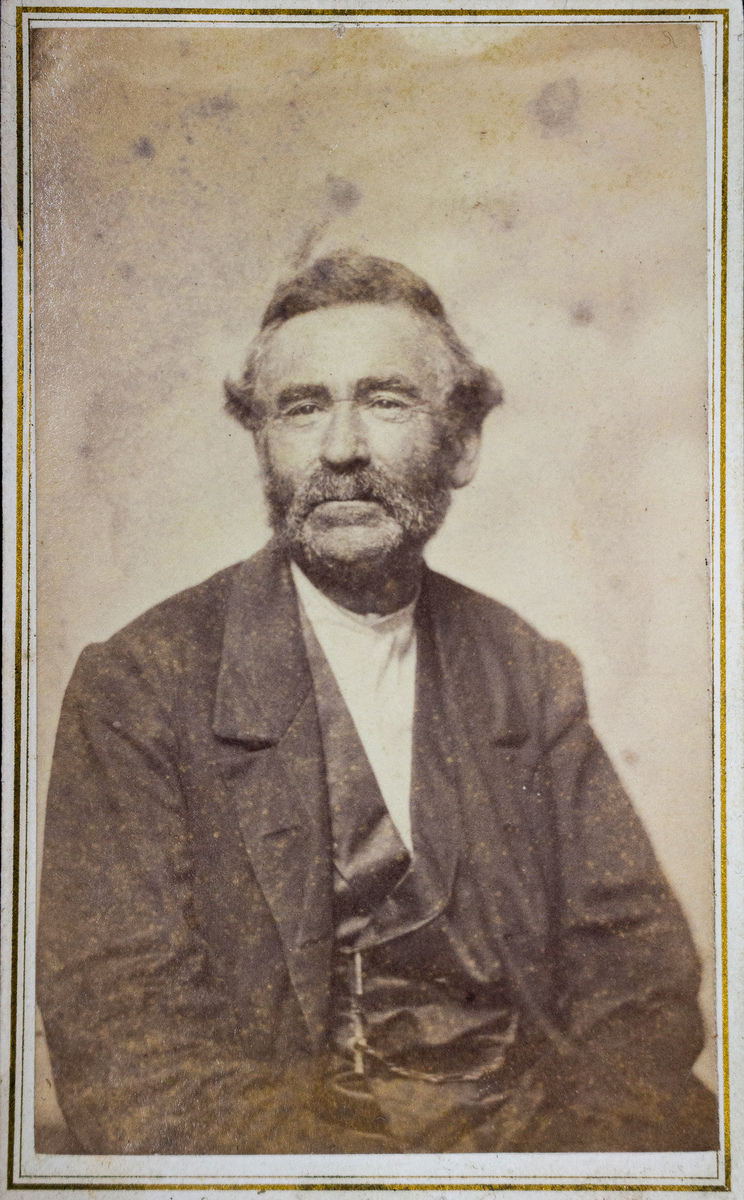
Figure 1 Photograph of William Matthew Prior, United States, c. 1860–73. Albumen carte-de-visite, 4 × 2 1⁄2 in. Image courtesy of The Trustees of Reservations, Fruitlands Museum, FM.M.1938.1
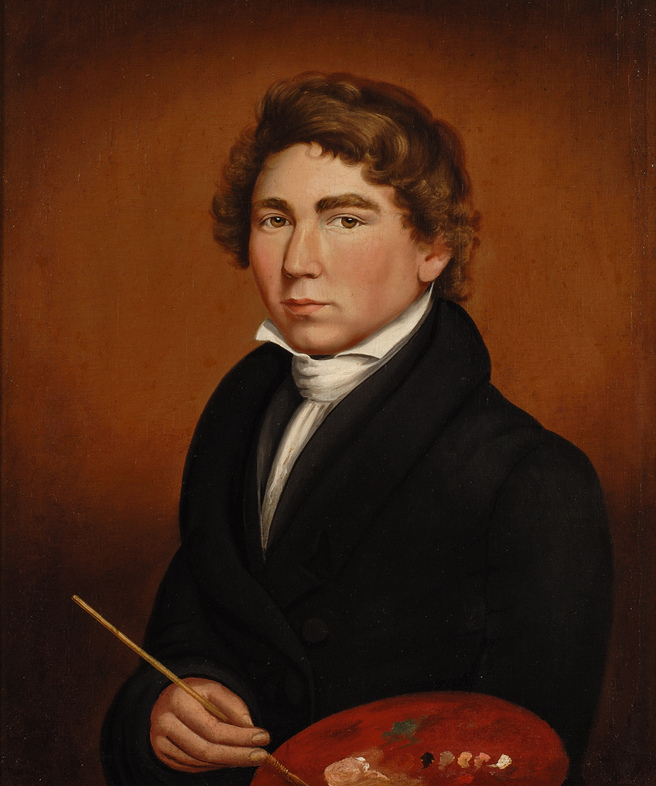
Figure 2 William Matthew Prior (1806–1873), The Artist as a Young Man: Self Portrait, 1825. Oil on canvas, 31 1⁄8 × 26 15⁄16 in. Collection of the Fenimore Art Museum, Museum purchase with funds provided in part by Dr. Nancy Kollisch and Dr. Jeffrey Pressman, N0008.2010 (Photo: Richard Walker)
The earliest known person to gather recollections of Prior was Grace Adams Lyman, who wrote the first article on the artist for The Magazine Antiques in 1934. At some point, Lyman met Matthew Prior (1847–1942), a retired mechanical engineer then living with his wife Anne in Watertown, Massachusetts, outside of Boston, where Lyman also lived.4 The information Matthew imparted to Lyman, mostly recalled from his childhood in the 1850s, is priceless and extremely rare in folk art research. At that time, William Matthew Prior had left behind the fervor and frenzy of Millerism and settled into a period of renewed artistic production. The portrait business was waning, and so Prior began to paint landscapes and reverse paintings on glass of historical figures such as George and Martha Washington. His first wife, Rosamond, and their son Joseph died of cholera in 1849, and he soon remarried to Hannah Frances Walworth, a Spiritualist.5 In the ensuing years, Prior also become involved in Spiritualism and claimed the ability to paint portraits of deceased persons “by spirit effect.”6
Lyman captured Matthew’s memories of both Prior’s home and his life as an itinerant artist. Matthew’s descriptions reflect his father’s keen desire to maintain a stable home in the midst of personal tragedy and social and familial change. In particular, he remembered his father’s house on Trenton Street in East Boston, the well-known “Painting Garret,” as
decorated with scrollwork and topped with a railed platform in the manner of many early dwellings along the New England coast. From this vantage point, the family, armed with a huge spyglass, could watch the ships in Boston Harbor. At one time, a large painting hung over the front door of the house, probably as an advertisement of Prior’s work.7
This colorful memory provides insight into the Priors’ daily home life and their connection to Boston Harbor and the maritime trade. Other recollections include Matthew’s “traveling with his father through New Bedford, Fall River, and all along the coast, spending four or five months in Baltimore. Often several members of the family accompanied him on these journeys.”8 This memory clarifies how Prior managed such long stretches of time away from home, recasting Prior’s relationship with his family from one of extended separation to a closeness rarely acknowledged in the literature.
Clara Endicott Sears, collector and author, gathered the most information from Prior’s family, as she devoted an entire chapter to the artist in her 1941 book, Some American Primitives. As Sears collected portraits in the 1930s, she became fascinated with Prior. She sought out Lyman, who accompanied her to Matthew Prior’s home in late 1937.9 The visit with Matthew made a distinct impression on Sears, and her detailed recollection of the encounter paints a compelling portrait of a man who was quite fond of his father and who, like him, was an artist.10
Matthew told Sears that “he [William Matthew Prior] taught me how to do it [reverse painting on glass], and, so you can see, I have quite a stack of them here.”11 Sears also recounted seeing Matthew “putting some finishing touches to a picture of a ship in full sail,” offering a tantalizing glimpse of him as a maritime painter.12 Although no known works by Matthew have come to light, some of the reverse-glass portraits attributed to William Matthew Prior may have been painted by Matthew at a later date. Sears noticed in particular Prior’s 1825 self-portrait, which along with other family portraits was then in Matthew’s possession. She recalled:
I remarked on the excellence of the portrait William M. Prior painted of himself. He was a romantic-looking young man with a black coat and broad velvet collar. A white/stock was wrapped around his throat. His features were well formed, and there was a thoughtful look on his face. “Yes,” said my host, “some say it was his best picture and a good likeness.”13
Sears soon met the artist’s granddaughter, Edith Prior Malcolm, then eighty years old. Edith, born in 1858, was the daughter of Gilbert Stuart Prior and Susannah E. Grove, and had many memories of Prior from her own childhood in the early and mid-1860s as well as stories about her parents and relatives. She, like her uncle Matthew and her grandfather, was also a painter.14 Edith recalled that her mother would often take her to visit her grandfather at his home and studio on Trenton Street, where she and her sister would wait downstairs (children not being allowed in the studio) while her mother visited her father-in-law. According to Edith, her mother “watched grandfather as he painted as she was much interested in his work.” Her mother was evidently very fond of Prior, as Edith remembers her speaking of him often. Despite the prohibition from the studio, Edith maintained that her grandfather “was always kind to us.”15
It was Edith who imparted the most detailed information on William Matthew Prior’s fervent Millerite beliefs, which have been widely but not quite so colorfully documented. As she described: “Grandfather often attended the Adventists’ meeting always accompanied by his oldest daughter [Rosamond Clark Prior] who often led him out as he frequently disturbed the gathering if anything particularly excited him.”16
This telling scenario, seemingly out of character for a man with a kindly disposition, illustrates the intensity of Prior’s religious and reformist beliefs, and his faith in Miller’s vision of the end of the world. It certainly helps to contextualize Prior’s professed ability to paint portraits “by spirit effect” (fig. 3).
Edith’s last significant recollection relates to Prior’s relationship with his eldest son, Gilbert Stuart Prior (1831–c. 1931; fig. 4). Named for Prior’s artistic hero, the great American portraitist Gilbert Stuart, the young Gilbert caused his father a great deal of distress in his youth, as Edith recounted:
My father (his oldest son) ran away three times and secured a job at a machine shop. Grandfather promptly went after him telling him that he would rather race the streets than have his children servants to any one. So much of that son’s talent was wasted and a useless life followed.17
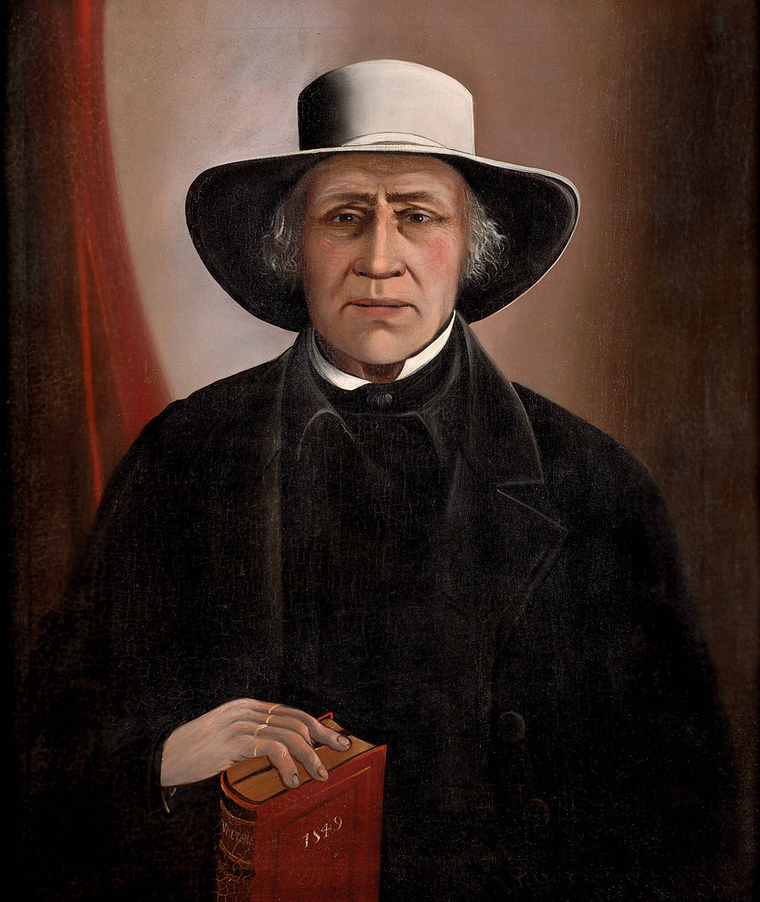
Figure 3 Attributed to William Matthew Prior, William Miller, c. 1849. Oil on canvas, 26 × 21 5⁄8 in. Collection of the Fenimore Art Museum, N0033.1960 (Photo: Richard Walker)
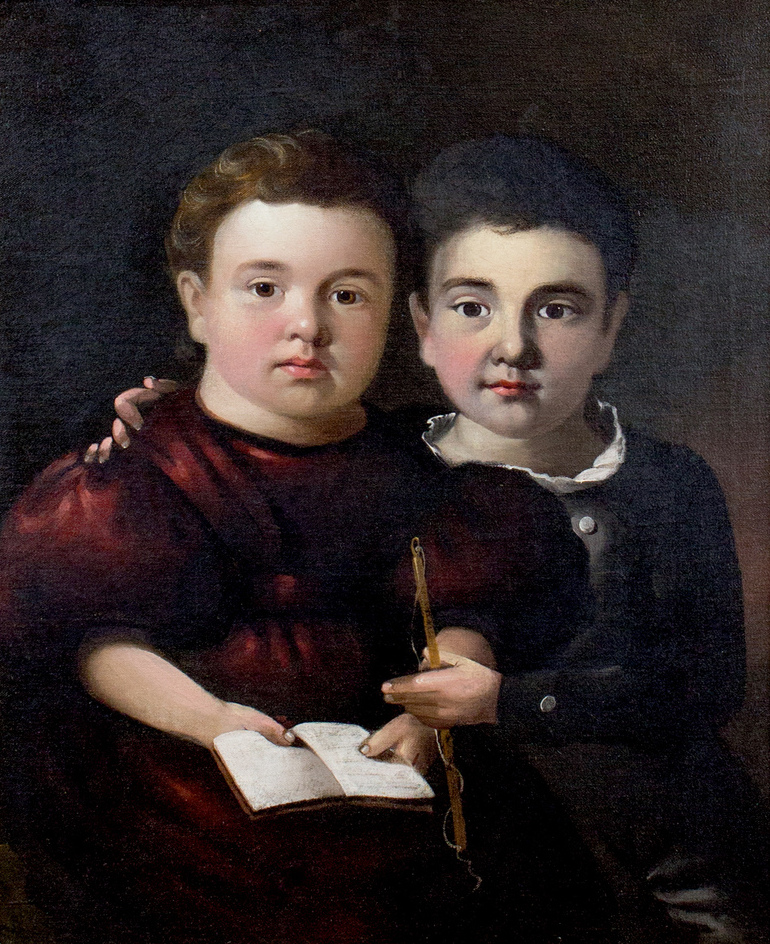
Figure 4 William Matthew Prior, Ross Clark Prior and Gilbert Stuart Prior, c. 1830. Oil on canvas, 24 × 28 in. Image courtesy of The Trustees of Reservations, Fruitlands Museum, FM.G.1946.247
As his daughter suggested, Gilbert never settled into a career.18
Edith Prior Malcolm presented a token of appreciation to Sears in 1938: the inscribed carte-de-visite of her grandfather William Matthew Prior. The image is telling, as it shows an older man with a rumpled appearance and calm, kindly face. Far from the fresh-faced confidence of the painted self-portrait executed several decades before, the photograph shows a quiet resolve born of many years of dedication and hard work, as well as disappointment and personal hardship.
At Fruitlands the photograph resided with several of Prior’s paintings and records of the memories that Matthew and Edith had supplied. Over the years, these memories largely faded into obscurity. The photo, meanwhile, remained preserved within the research files and forgotten. Its reappearance now is a reminder that Prior was not simply an artist but also a human being as devoted to his family as to his art and deep reformist beliefs. Viewing this photo and reading recollections of Prior, one feels as Sears did eighty years ago, seeing in her “mind’s eye” the Trenton Street house, with “the whole family party starting forth from the front door on a quest for possible patrons who might want their portraits painted.”19 In the end, it is Prior’s humanity that fully explains his dedication to family amid social change and the democratization of portraiture after the invention of photography. For all the faces that William Matthew Prior empathetically portrayed, by portrait sitting or “spirit effect,” the artist can now show his own.

Acknowledgments
I am grateful for the invaluable assistance of Anna Thompson, collections manager for the Trustees of Reservations, Fruitlands Museum, for providing access to the artworks and research files related to the Prior-Hamblin School at the museum. She, in particular, made sure that I saw the carte-de-visite of William Matthew Prior that formed the basis of this essay. My thanks also go to Jen Griffiths, manager of photography at the Fenimore Art Museum, for her assistance in supplying high quality images of our paintings. To Jackie Oak, who passed away on June 1 of this year, I owe a debt of gratitude beyond words. Her scholarship, enthusiasm, and generosity on all things Prior-Hamblin have been a constant source of inspiration and will be sorely missed.
About the Author
Paul S. D’Ambrosio is president and chief executive officer of Fenimore Art Museum and the Farmers’ Museum in Cooperstown, New York. He has worked in the field of American folk art for four decades and is the author of many articles and exhibition catalogues, including Folk Art’s Many Faces (co-authored with Charlotte Emans and others; 1987) and in Ralph Fasanella’s America (2001). His first encounter with the Prior-Hamblin School was in November 1981 when, as a graduate student, he and his classmates had the great fortune to visit the Braintree, Massachusetts, home of Bert and Nina Fletcher Little.
1 See Nina Fletcher Little, “William M. Prior, Traveling Artist, and His In-Laws, the Painting Hamblens,” The Magazine Antiques 53, no. 1 (January 1948): 44–48; and Jacquelyn Oak and Gwendolyn Dubois Shaw, Artist and Visionary: William Matthew Prior Revealed (Cooperstown, NY: Fenimore Art Museum, 2012).
2 I am grateful to Anna Thompson, collections manager for the Trustees of Reservations, Fruitlands Museum, for her invaluable assistance in finding the carte-de-visite of Prior.
3 Grace Adams Lyman, “William M. Prior: The ‘Painting Garret’ Artist,” The Magazine Antiques 26, no. 5 (November 1934): 180; Clara Endicott Sears, Some American Primitives: A Study of New England Faces and Folk Portraits (Boston: Houghton Mifflin, 1941).
4 See familysearch.org.
5 For Prior and Millerism, see Oak and Shaw, Artist and Visionary, 20–25; for the death of Prior’s wife and son, 27; for landscapes and reverse paintings on glass, 29.
6 For “spirit effect” portraits, see Oak and Shaw, 27.
7 Lyman, “William M. Prior,” 180.
8 Lyman, 180. Prior was so active in Fall River that following his death, an obituary appeared on page 1 of the Fall River Daily News, January 24, 1873. It stated that he “was a former resident of this city, and was favorably known here as a portrait painter.” It is not known how long Prior resided in Fall River, or if he simply traveled there to paint portraits.
9 Grace Lyman Stammers to Clara Endicott Sears, September 30, 1937, Fruitlands Museum Research Files. Lyman Stammers stated, “I feel sure that I could arrange to take you to see Mr. Prior and the portraits mentioned in my article, by appointment—if you think you might learn something of interest.”
10 Sears, Some American Primitives, 31–32. Sears recalled: “His chair was drawn close to the window so as to get all of the now fading light, and he was hard at work painting on glass, which was one of the avenues of art frequently used by his father when old age came upon him. When he turned towards me, I hastily explained the reason of my visit. . . . He at once put down his paint brush, and leaned back in his chair with a smile of pleasure on his face. He did not speak for a few minutes.”
11 Quoted in Sears, 34. Like his father, Matthew was likely painting reverse-glass portraits of famous personages, especially George and Martha Washington, which were in great demand in the 1930s.
12 Sears, 34.
13 Sears, 33–34. Prior did at least one other self-portrait, in 1848. See Sotheby’s, Important American Furniture, Folk Art, Folk Paintings and Silver, sale 5622, October 24, 1987, lot 299. The portrait’s current location is unknown. Interestingly, it accompanies a portrait of his first wife, Rosamond (also lot 299), painted in 1827 and retouched by the artist in 1841.
14 Sears, 35. Sears recounts visiting Malcolm and being ushered into a room “strewn with oil paintings,” with one on an easel in the process of being painted. The scene caused her to gasp to herself, “Still another Prior who paints!”
15 Edith Prior Malcolm to Clara Endicott Sears, August 9, 1938, Fruitlands Museum Research Files. See also Sears, Some American Primitives, 35.
16 Malcolm to Sears, August 9, 1938.
17 Malcolm to Sears, August 9, 1938. For more on Gilbert Stuart’s youthful escapades, see my essay “The Elegant Brush of Sturtevant J. Hamblin (1816–1884),” p. 75, in this volume.
18 Gilbert Stuart Prior advertised briefly as a landscape painter in the 1850s, living with his father on Trenton Street. He then became a house painter and later a machinist and engineer serving in the US Navy during the Civil War. In his later years he referred to himself as a “patent inventor.” Biographical information on him is from Adams’ Boston City Directory, 1855–99. For his landscape painting, see the directory for 1856, 276; for Naval service, see 1864, 296.
19 Sears, Some American Primitives, 34.